Creativity is allowing yourself to make mistakes. Art is knowing which ones to keep. Musings from someone who sees stories everywhere.

Sunday, October 20, 2013

A Restless Wind; book review


ISBN 9789382616115 Author, Shahrukh Husain, Publisher Pan Macmillan India, Pp 360, Rs 499/-

A Restless Wind piques the reader’s interest from the very beginning with fine details and a strong and engaging protagonist. However, a restless wind blows through the closing chapters, leaving a heap of tangled threads. Hana, the ailing matriarch of the Ramzi clan of Muslim gurus to the Hindu rulers of Trivikrampur in Gujarat, knows her end is near. She needs to clear up what she can and rectify mistakes of the past before 21st-century sectarian violence ruins the age-old communal harmony of her beloved Trivikrampur. She chooses to reveal these stories she should have told long ago to her dear niece Zara, whom she summons to their family home in Qila....

The theme of communal prejudices runs through the novel, and the author explores its many aspects in a balanced manner. The opening pages introduce us to the demon of communal violence in present-day India. The armies of dispossessed, who flee for safety across boundaries of sea and land, are Zara’s clients who seek asylum in Britain. The author balances this with specific acts of goodness. Zara’s client, Parveen’s family, is massacred by communal forces in Gujarat.

Yet a Hindu auto driver guides her to safety. Other good Hindus rescue Parveen after she is raped and brutalised. Hindus like the “Swami guy” help Muslim victims of communal violence, and themselves end up as “fucking asylum seekers in the UK,” with no housing, no NASS allowance and a dog’s life. Zara sees racial and cultural prejudices everywhere among the British as well, with “hooligans chanting racist and misogynist obscenities.” Zara comes home to Quila to find its walls charred by arsonists protesting against “the Ramzi-Vamana bond and the blurring of religious boundaries,” dating back to the legends of the Green-clad Man, who founded the Ramzi clan.

The first half of the novel leads us to expect further exploration of the inner life of Zara and other major characters and the intricate dynamics of communal harmony and disharmony in India. However, the latter half of the novel overwhelms with a profusion of new characters and sub-plots. Hana dies before revealing her secrets to Zara, who resolves to uncover them on her own. We are rapidly introduced to Zara’s cousin Saif, the spiritual head of the Ramzi clan, his wife the peevish and suspicious Pebbles, their mentally-challenged daughter Sharmeen and her cousin and lover Kamran.

 Things happen so fast, that we do not learn enough of their true feelings. We are told, for example, that Pebbles and Saif are deeply in love. Yet Pebbles plans a shopping spree for her daughter’s trousseau just after his sudden death. Did Aunty Hana really alienate Zara from her mother, while professing to love her? Dilkash’s demented narration of Nyla’s past is one example of too obvious and expedient a plot device.

Too many things involving too many people happen simultaneously in the latter half of the novel. Each of these many subplots is potential Bollywood material. As things stand however, they give the impression of outlines rather than fully fleshed out characters and their stories. There are mysteries galore with Sita Devi and her strained relations with Hana, who were formerly like sisters. Sita Devi hints that her son Jay and Zara may share the same father, making Zara cool off toward her former lover.
In sum, this book begins on an interesting and exciting note, but towards the latter half, the multiple characters and their stories get entangled into a confused heap. There are passages of fine writing and character delineations, but the momentum and focus gets diffused toward the end.

My detailed review is published in Sunday Herald

Wednesday, October 09, 2013

Heroes around us


In the good old days, our heroes were towering personalities such as Sardar Patel, who focused on strengthening our newborn nation with single-minded conviction. Gandhiji inspired us through a non-violent revolution, wanting the bare minimum for his personal needs, and striving for everything worthwhile for his fellow Indians. Gandhiji was a simple man, yet he heroically brought the mighty British Empire to its knees. Their followers have since gone the way of dodos and dinosaurs. New breeds of heroes have evolved, taking their hallowed predecessors’ ideals to fresh and previously unimagined directions.

Humanity has always needed heroes as role models to guide their lives. Our heroes are changing along with our value systems. The primary aim of Indians today is to somehow make as much money as possible. Everyone worships money, from government officials drooling over bribes, to private manufacturers pushing shoddy products with deceptive advertising and indifferent customer service.  Scamsters are today’s heroes, because they make the most money. They pursue this aim with the single-minded devotion of the heroes of yesteryear, striving to excel as faster, stronger and bigger crooks. Our leaders of yore preached the equality of all, irrespective of caste or creed. Modern scamsters treat Peter, Shanta Bai, the government or Rahim equally, for they see everyone as suckers to be duped. Nothing matters as long as their Swiss bank accounts fill up.

No wonder, so many of our netas who lead the nation have also been involved in colossal scams! The more prominent and powerful the neta, the bigger the alleged scam that temporarily knocks him out of action. These scam-tainted netas have the die-hard determination and resilience of a Sardar Patel or Gandhiji. No ignominy can suppress their invincible spirit. They return to contest elections, reclaim their gaddis, and set an example of courageous determination before the aam aadmi. A hero deliberately and bravely overcomes hurdles without regard to personal consequences. Scam-tainted netas are true heroes and leaders, for they brave all odds to pull off mighty scams. True heroes are selfless people who strive for the good of others. Today’s monstrous scams benefit many. After all, the loot is shared with sundry kinsmen, chamchas, and their neighbours and in-laws. Jai ho, heroic, die-hard scammies!
What’s the use of heroism, if nobody notices, or forgets in nanoseconds? A new breed of popular role models are perfecting the art of being constantly seen and heard, even though we aren’t quite sure why they deserve to hog the limelight. Glamorous fashion models, Bollywood stars, meteoric stars, wannabe stars and other motley celebs are another category of heroes perfect for our times. What makes them so wildly popular?

Well, most of us are mediocre, and we relate best with our own kind. We may pay lip-service to the Sardar Patels and Gandhijis. But we know that it’s next to impossible to reach their sky-high standards. We adore glamour because flaunting expensive possessions and slathering cosmetics can make us, our milkman, and our domestic help glamorous too. Even if we don’t win the Miss Solar System or Mr Asteroid Belt title, we can still aspire to be Miss Palace Guttahalli or Mr Kalasipalya and flash our booty on Page 3. The film industry can make a hero out of anyone. Filmmakers have absolute power to make their world of fantasy seem real. Film actors, who are ordinary people, become heroes of this fantasy world created by the imagination. Glamour, therefore, is an egalitarian and accessible aspiration for anyone and everyone, in the best traditions of Gandhian philosophy.
...
Fake show and empty-vessel hoo-ha dominates our world. Yet a few Indians continue to do their best and make a difference despite setbacks. They do the right thing, shoulder responsibility, and facilitate change without making a show, because it comes to them naturally. Real heroes of today are upright and sincere people like Dr Verghese Kurien, who strived against vested interests and organised the milk co-operatives in Gujarat into the iconic AMUL. From being deficient, India is now the world’s largest producer of milk. ...

Why do the names and achievements of such modern heroes flicker so briefly in the public eye before being eclipsed by the screaming glamour brigade? Simple. Their unassuming, unglamorous personalities cannot promote toothpastes, piles ointments or other commercial products. How will the media afford to give them more visibility, if they cannot earn enough ad revenue to sustain the hoopla? As shopaholic consumers, we perpetuate this trend. We feel that by owning products advertised, we can be like the glamorous people glorified in zillions of ads. We try to escape from our mediocrity by becoming ‘heroic’ through the cult of consumerism. It’s easier to buy stuff with that ‘feel-good factor’ instead of struggling to genuinely excel at anything.

Another reason why true achievers with bona fide credentials do not always get the appreciation they deserve is because they make us uneasy at a deeper level. Sincere people who naturally strive for excellence without hankering for publicity are constant reminders of high standards which we may never be able to reach. Rather than follow their example and drive ourselves to excel, we try to ignore them. We usually praise them with brief obituaries only after death, when they are no longer able to make us feel inadequate and guilty by their superior presence.

If we look past superficial glamour, we will find true heroes all around us, among ordinary people. These heroes have human imperfections, but they rise above difficulties to accomplish something positive. They are not showy, but have the quiet courage to do the right thing. They have the mental and moral strength to face adversities, and fearlessly walk the talk. Haven’t we all, at some stage, benefitted from the depth, knowledge and generosity of a parent, teacher, friend or mentor? It’s time we stepped forward to encourage such unassuming heroes, and to make a conscious choice to support the right values. In this way, we can spread courage and support those around us as we face the trials of life. Each of us can be a brave hero by becoming disciplined and resolute in our own hearts. It’s true that we can’t all save the world, but each of us can show bravery by standing up for our principles. True heroism is to be genuine, to quietly and firmly persist in doing the right thing despite opposition or taunts from others.

Read my entire essay published in Sunday Herald

Monday, September 23, 2013

Book Review: What the River Washed Away


Sometimes, a novel with an agenda can be a great read too, like this one by Muriel Mharie Macleod.
Louisiana in the beginning of 20th century US is no place for brave spirits like Arletta Johnson, a black girl who is compelled to escape the land of her birth and seek a life of freedom and dignity as a missionary in Africa.
They may no longer legally be slaves to white men, but even the government is ambiguous about black welfare. Arletta’s mother Mambo notes “how they used to stop us blacks having any schooling all ‘cause they didn’t think we were up to being educated and how now they’re telling us we gotta go.”

National and world politics play out in the backdrop, but life for poor blacks like Arletta remains miserable as ever. As Mambo observes with earthy wisdom, “ain’t no white folk ever share nothing with any of us.” Jobs are hard for blacks to come by, with white people accusing blacks of trying to escape military service, “like we ain’t got no right to be getting on the same as anybody else.” ...

The author does an amazing job of bringing the world of black people in early 20th century Louisiana to vivid life. Her accuracy and empathy for the characters is even more striking since she herself was born and brought up in remote Scotland, and has no direct link with the culture she portrays so well. This novel would be engaging and illuminating enough as a historical tale. However, Arletta’s journey of regaining her life and dignity takes on even broader and more timeless implications because of the underlying theme of child sexual abuse.

One drawback of this novel is that major characters are either angels or baddies, without enough shades of gray. Arletta wins our admiration for her courage, generosity and resolve. However, she also seems too good to be true. She readily forgives her mother for her past neglect and insensitivity. She reconciles too easily with her mother’s new partner, Quince, and showers her little stepsister with undiluted love. There’s no hint of regret or jealousy for the love and security, which the stepsister enjoys, and which was denied to Arletta.

Pappy hovers in the background as the departed wise and loving grandfather cum guardian angel. Mr MacIntyre and Mr Seymour are archetypal white villains, who ruthlessly prey on innocent little girls for their perverted sexual gratification. They are straw-stuffed effigies who deserve to be burnt, and they don’t have a shred of a saving grace or human quality between them. In contrast, Arletta’s landlady Mrs Archer-Laing, is a benign white do-gooder and champion of black equality.

Some of these one-dimensional characters have implausible turnarounds, which seem more for the sake of conveniently wrapping up the story. Mambo’s metamorphosis from negligent and insensitive mother to a loving champion for Arletta’s cause, is unconvincing. Equally incredible is Quince’s change from a good-for-nothing philanderer to a responsible partner and loving father and stepfather.

That being said, Arletta’s courageous story holds our attention till the end. Her world is brought home to us with memorable descriptions and lifelike dialogues, and the plight of sexually abused young girls is vividly portrayed to move the hardest hearts.


Tuesday, September 03, 2013

A Fort of Nine Towers: book review

FortofNineTowersA Fort of Nine Towers by Qais Akbar Omar (Picador UK; 14.99 Pounds; Rs 599, Pp 396)
Qais Akbar Omar was born in an Afghanistan where “our neighbours were like us, quiet and educated people. When there was a wedding or engagement party in one of their houses, everyone in the neighbourhood was invited, along with their kids and servants.”
This remarkable memoir brings to life a complex and at times strikingly beautiful Afghanistan beyond the news clips of war and violence the rest of the world has seen since decades. The author remembers the society of his early childhood as warm and benign. As a respected citizen without any elected position, young Omar’s grandfather talked after prayers at the mosque on how to keep the neighbourhood clean, solve civic problems, and create better facilities for the children to play together. People listened to him, and he discreetly helped neighbours in financial straits....
This memoir is structured around contrasts. As the author, now a young man living in post-war Afghanistan, begins telling his story, a phone call reminds him of his aunt who emigrated to Canada during the war. The aunt is searching for a bride for him, among expatriate Afghan girls who have become young women in a free and peaceful country. She has “seen them taking full advantage of opportunities they would never have had in Kabul had their families stayed there over the past three decades.” The author is now twenty-nine years old, has a university degree and runs his own carpet business. He also has both arms and legs, all of which is normal in most parts of the world, but “which is an issue in mine-ridden Afghanistan.”
As young Omar grows up, he sees his idyllic world crumble around him with a child’s innocent bewilderment. When the Mujahedin arrive in Kabul, people all over town come out to chant ‘Allah-hu-Akbar” to welcome the ‘holy warriors’. As Omar’s father explains, people “want the Mujahedin to come to Kabul and make the Russians leave Afghanistan.” Meanwhile, Omar’s sister tries to scare him by saying this chanting is the beginning of Doomsday. Little Omar is not sure whom to believe. Like the children, the adults too are innocent and full of hope. Ironically, it is the children’s innocently voiced fear which proves true. Soon, war spreads to Omar’ own neighbourhood. Mujahedin break into their home and loot their valuable carpets. Omar’ observations, rife with a child’s innocence and clarity, drive home difficult truths. “Suddenly, I understood that these guys were ordinary thieves who had joined one of the factions. They were not true Mujahedin who defend their country and faith against the invaders and heretics.” The new intruders lose no time in ravaging a lovely and peaceful neighbourhood into a war zone.
...This is a moving account of love, determination and survival against terrible odds. The author portrays the richness and beauty of Afghan life and culture with love and respect. He voices with clarity and dignity, deep pain at that has happened to his family and to his country. While demonstrating the strength, generosity and deep seated values of his people, he successfully transcends barriers with the universal hope for peace and amity.
This is a truly moving book, a must-read. My detailed review is published in Kitaab

Monday, August 26, 2013

Homeland and Beyond

  As we celebrate the 66th anniversary of India’s Independence, many of our compatriots are clamouring for divided identities. The issue of separate statehood for Telangana has reached a feverish pitch, giving a boost to similar demands elsewhere in the country. The cry for Bodoland has resurfaced, Gorkha Janamukti Morcha supporters are calling for a separate Gorkhaland, while the Codava National Council is gearing to press for an autonomous Codava Land. Will the call for a division of Uttar Pradesh build up? When everyone and their neighbours seem to be staking their claim for distinct identities, where will we stand as Indians? Will we support increasingly narrowing sub-divisions and fight among ourselves for shrinking patches of home turf? Or, shall we transcend constricted allegiances and boundaries to become not only Indians, but true citizens of the world? What defines a homeland? Is it ethnicity, language, religion, customs and beliefs? Are we Indians simply because we happened to have been born as citizens of this sovereign republic? Deep inside, do we identify ourselves more strongly as Kannadigas, Punjabis or Marathis, or according to our religious affinities? Where do we really belong?

In recent times, humanity has made rapid strides towards a global community. Yet, today, Indians are flying to foreign shores in droves, not always to open themselves to other cultures, but often to cocoon themselves within ‘little Indias’ overseas. Many prefer seeking out others from their own community and linguistic groups instead of mingling with the locals. Even within the boundaries of our own country, we prefer to associate with members of our own religious and linguistic communities. This can often happen at the exclusion of other groups.

Read my take in full in Sunday Herald

Thursday, August 15, 2013

The Geo Drama, inside story

Today we celibrate India's Independence Day. Jai Hind!

Writers crave independence too, in their very own way. They do need the freedom and space to write, to be free from financial burdens and the muddled mess of the world.
Prominent magazines fold up every now and then, leaving faithful readers, and writers and staff, high and dry. Writing is, at best, a precarious existence. Many 'creative writers' focus their energies on writing magazine features, ad copy, brochures etc.  A handful of writers puruse their true passion, writing original novels and stories. There's nothing in it financially for most authors. Ocassional messages from delighted readers are the the author's sole reward. Gigs with magazines, tech writing, etc are often such passionate storytellers' sole lifeline to roti, kapda aur makaan. They slog away at such not-really-that-creative, but much more routine jobs, to find some space to write their original stories.

 People often accost us only to wheedle out free copies of our books. Fact is, we are not born into wealth, and we are rarely appreciated for puruing our creative interests despite all uncertainties and odds.


Payal Dhar, who has written several spellbinding novels to date, has been among those summarily cast aside when Geo magazine recently folded up. She "Decided there was no point festering, so I'd just write about it:"

Here's her take:http://writeside.net/scratchpad/what-happened-at-geo

Tuesday, August 06, 2013

College Street, Kolkata coffee break

The first time I visited Kolkata's book street, it was a voyage of discovery. The maze of bookstalls, iconic educational institutions and blasts from the city's colonial past threw up startling surprises and a few disappointments.

A busy road lined with miles of bookstalls

I revisited Boi Para recently, this time in the company of someone who grew up there, and is now guiding young minds. Dr. Sandipan Sen belongs to that uncommon breed of scholars, who revel in delving into interesting but little-known facts. If it weren't for individuals like them, so many facts and details would be glossed over by those out to simplify everything into easily digested bytes. such scholars enrich our collective knowledge and strive to keep public memory alive. Are people like him out to show off their learning and dazzle others? Not at all. Dr Sen is low-key and unassuming, and the twinkle in their eyes makes one suspect that they hide much more knowledge than they are ready to flash before others. In fact, such people merely point out omissions and errors which many others would have missed. The idea is to be true to facts and get the right perspective. This is necessary, or people would be making errors unwittingly, or even deliberately misrepresent facts to misguide others.
David Hare's tomb, relic from the Raj


"Bankim Chandra had once lamented that Bengalis do not care for history," he shares. "This is once again evident when we see that a film has been released, titled "Bombay Talkies", which is purported to be a tribute to the father of the Indian cinema, Dadasaheb Falke, on the centenary year of Indian cinema - because Indians have accepted the claim, made by the Mumbai lobby, that dadasaheb Falke had made the fir...st film in India. And, alas, no one remembers - not even any Bengali does - that the true father of Indian cinema was not Dadasaheb Falke, but Hiralal Sen, who made his first film, "A Dancing Scene", and made several more feature films between 1901 and 1913. Not only that, he produced India's first ad film - on Jabakusum Hair Oil, and he also made India's first political film - an anti-partition film which was shown in the Albert Hall in September 1905. He also founded the first film company in India - the Royal Bioscope Company. Everyone has managed to forget Hiralal Sen, and now we treat Dadasaheb Falke as the first Indian film-maker - though his first film, "Raja Harishchandra" was made only in 1913 - the year in which Hiralal Sen had made his last film!
Bankim was right. We don't care for history. Nirad C. was right too - we are a self-forgetting people."

Albert Hall coffee house with Dr Sandipan Sen
His advice was very helpful when I was writing my biography of Rabindranath Tagore for young people. I wanted to thank him in person when I visited Kolkata. There we are, in the iconic Albert Hall coffee house in College street. Dr Sen was once among the students here, who gather to discuss books and everything else under the sun. Our wizened waiter knew his patron from his college days, and the atmosphere buzzed with life.


Dr Sen enjoys sharing unusual nuggets of little-known information. Here's a sample from his stores:

 "He used to earn Rs 60,000 a year from his paternal property, which allowed him to save Rs 50,000 a year, because - in spite of his lavish lifestyle - his annual spending was not more than Rs 10,000. However, despite having such a huge income, he accepted the job of a petty Sereshtadar which carried a paltry pay of Rs 150 per month. Why did he do so? Simple, after six years of service, he could amass Rs 12 lakhs from this job, which was the initial capital of the Union Bank!! Rs 12 lakhs in only six years with an income of Rs 150 per month? Impossible, you would say? Yes, arithmetically so, but not practically, because there was no bar in those days for the government officials to pursue independent business ventures, and he did that - and did successfully by exploiting his official position (in those days people had scant regard for moral laws, his grandfather turned rich by becoming a Thikadar for the almost-never-ending project of building the new Fort William in Calcutta - a project from which everyone grew rich)!!

So, he had his own reason to look for a government job carrying a meagre salary compared to his huge income - because that allowed him to earn even more money by exploiting his official position. And he is called the first "Udyogpati" (entrepreneur) of Bengal!!

My idea about entrepreneurs and about how people grow rich became even stronger with these facts about Prince Dwarkanath Tagore, who turned so rich that he could spend Rs One Lakh in a month during his stay in London!!

Truly, even if a camel can pass through the eye of a needle, a rich man cannot go to the kingdom of God, as famously enshrined in the Bible. Because the way to money is not fair, as we understand from this example."


Photo: The first Indian to be seated along with the head of the state of a foreign country during the Army Review Ceremony (equivalent to March Past) of that country. "Prince" Dwarkanath Tagore. In Great Britain. It was on 23 June 1842.
Raja Ram Mohun Roy
Bankim Chandra Chattopadhyay
  
Here's some more: "The first Indian to be seated along with the head of the state of a foreign country during the Army Review Ceremony (equivalent to March Past) of that country. "Prince" Dwarkanath Tagore. In Great Britain. It was on 23 June 1842. "

From Albert Hall coffee house, Dr Sen led us through a maze of by-lanes into amazing world of subaltern intellectuals, who continue to flourish in the nooks of College Street. Not for them the mainstream business of textbooks, guide books and pulp bestsellers. Niche specialists here lovingly compile and propagate storehouses of information on less-known but interesting esoteric topics.
Winding our way through rows of homes, printing presses and even more bookstores, we arrived at a store with books lining the antique show window. Anil-da greeted us from his desk polished well with years of use. Prof Anil Acharya, the editor of Anustup, writes and publishes on esoteric aspects of Kolkata's rich and varied culture. What was the city like in the times of great intellectuals and reformers such as Raja Ram Mohun Roy and Bankim Chandra? Prof Acharya will pull out scholarly books to satisfy your curiosity.

Prof Acharya was Dr Sen's former teacher, and the two share great chemistry. Their eyes twinkled with flashes of subtle wit as they discussed the alternative literature produced by Kolkata's Bot tola indigenous presses of yore. Did you know that people from the Marwar region of Rajasthan spread to Bengal centuries ago as they expanded their business and trade networks. Over time, they blended with the local culture while maintaining a distinctive identity. They have thrived in Kolkata for centuries.  You'll learn all this and more from the books Prof Acharya champions.

These scholars who enjoy learning for its own sake, don't always have their heads lost in the clouds. A gentle nod from Prof Acharya signalled a wizened mashi to enter with steaming cups of tea. Endless freewheeling addas over coffee and tea is one of the many charms of College Street.

Monday, July 01, 2013

The Infatuations book review

The Infatuations, by Javier Marias
Translated by Margaret Jull Costa

Hamish Hamilton

Rs 550/-

Pp 345


This novel goes on to explore beyond an apparently senseless murder, with which  it opens. Maria Dolz, an editor at a publishing house, remembers Desvern and his wife Luisa as the ‘perfect couple’. Every morning before going to work, she would admire their blissful love from a distance as they breakfasted with her in the same cafe.

The rest of the novel delves into what could have brought a wealthy gentleman with no known enemies to such a gruesome end. Was there a stealthy enemy with a secret motive? How did the dying man feel in his last moments? What could have gone on in the mind of the deranged assailant? The specific incident gives rise to far-reaching speculations. What motivates the perpetrators of acts of violence? How does violence affect the instigator, the victims and bystanders, and change them?
The author does the opposite in this book, making a specific killing the launching point for far-reaching metaphysical and moral speculations. “What happened,” says Diaz-Varela, the self-confessed mastermind behind Desvern’s killing, “is of little importance and soon forgotten. What matter are the possibilities and ideas that the novel’s imaginary plot communicates to us and infuses us with, a plot that we recall far more vividly than real events, and to which we pay far more attention.”

However, the first half of the novel is tedious reading. Pages filled with paragraph-long sentences about theoretical speculations can tax the reader’s patience. The author deliberately reinforces this by making the characters mouthpieces for complex ideas, rather than fleshing them out as individuals. The scholarly Rico, the penurious working class Maria Dolz, Luisa the grieving widow, the man-of-the-world Diaz-Varela, all spew forth pages upon pages of identical speculative monologues. Real people rarely think and speak like this, but everyone in this book has their head in the clouds.
....Touches of humour attempt to relieve the monotony of philosophical and moral theorising , which occur more often in reality than in novels. With a self-deprecatory sense of fun, the author allows Maria to dissect publishers and bestselling authors and their book launches...

It is then that the author rewards the patient and persistent reader with his “grave, somehow inward-turned voice and the often arbitrary syntactic leaps he made, the whole effect seeming sometimes not to emanate from a human being, but from a musical instrument that does not transmit meanings...” From the second half of the novel, we are regaled with a marvelous symphony of quickly succeeding waves of speculations; life, love, death, war, crime, morality, human perversity and cunning. Delightful vistas of endless possibilities, stories and mysteries open up, making this book a rewarding read.
My detailed review is published in Sunday Herald


Tuesday, June 25, 2013

Sab chalta hain to hum bhi age badhte hain

Despite the challenges of rampant corruption, disorganisation, bureaucracy and inefficiency, India manages to keep going. We Indians seem to have excelled in making our lives work. We survive, and even thrive, in adverse conditions. We deserve a pat on our back for our determination and resilience.

Recent personal experiences forced me to think deeper about our attitude to life. As a reader of my published essay suggested in response,  "we have to change the attitude of indian sab chalta hain to yeh sab nahi chalega..."
But do we really need to change our attitude of acceptance, and of continuing to perform our duties without stressing upon expectations, foreseen rewards, or brooding over the grass being greener on the other side? After all, isn't this attitude of ordinary Indians like us, keeping us alive and moving forward despite all odds?

India is a land of contrasts and contradictions. We’re colourful, confusing, wonderful, and at times, simply obnoxious. We are like this only, but what makes us so? How have we maintained our character, spirit, and that intangible but unique Indian identity amid all the chaos? Daily life in India is rife with challenges. Rapes, robberies, murder and mayhem make lack of law and order the order of the day. Yet India manages to keep functioning. Tenacious people have found a way to keep things limping, if not running. Indians somehow make their lives work. They survive, and even thrive, in adverse conditions. ...
Our ancient philosophical heritage of tolerance and acceptance has been distilled into today’s catchphrase ‘sab chalta hai.’ This philosophy makes us unique in our acceptance of the most outrageous and harsh aspects of life. Powers above us have decreed how life must be. It is not for us to challenge, but to accept and continue to do our duty without expectations. We take in our stride man-made and natural adversities, put behind us the gravest injustices and crimes, and get on with our lives. It is this shared attitude that binds our mish-mash of ethnic, cultural, regional and linguistic identities under a broader identity as Indians. Scams, scandals, bribes are happening everywhere. Everyone has a finger in the pie. Why waste our time and energy fighting what fate has willed? ‘Sab chalta hai’. Let’s accept it and continue with the business at hand, rather than wallow forever in the muck.

I personally experienced the unifying nature of our common philosophy recently. I also realised its positive and constructive aspect. I lost my father, and had to do the mandatory rounds to get the death certificate. An official helpfully offered to spare me the bother, if I would pay him an advance of Rs 800 for his services. I promised to think it over. I then directly approached another office, to which the papers had been forwarded. There, after several fruitless visits, I felt as though I was chasing wild geese. “Nonsense!” said other applicants waiting with me in queue. “The certificate is issued on the same day. They must be after money, but don’t tip more than the going rate of 80 to 100 rupees.”
“Why don’t you flaunt your press connections and jolt them into working,” advised a friend. Easier said than done. In a world which refuses to look beyond appearances, I cannot live down the impression I give of a soft-spoken, muddle-headed eccentric with hair like a bird’s nest. A relative offered the most pragmatic advice. “Put yourself in the official’s shoes,” he said. “The poor fellow has to pay under the table to put his kid through school and college, get the garbage in front of his home cleared, and even just to stay undisturbed in the same job and not get transferred to Huliyurdurga or Periyapatna. With salaries being low and disbursements often getting delayed, how else can he make ends meet?”

‘Sab chalta hai’


When I see things your way and you see it my way, there’s a chance that we can work things out without conflict. This is at the heart of our national character. Like most of my compatriots, I’m tolerant, peace-loving and somewhat shiftless. I firmly stand by our time-honoured philosophy of live-and-let-live, simply because it’s the path of least effort and resistance. “Sab chalta hai,” I said to myself with a shrug, hinted at a ‘little something for his trouble’, and got the certificate promptly. I could have troubled the overburdened Lokayukta with a formal complaint and the headache of dispensing with yet another petty case. But, being a typical easygoing, tolerant Indian, I chose to expend my limited energies constructively on writing this essay instead. See how our ‘sab chalta hai’ philosophy can bear positive fruits? I left the office with my certificate and a feeling of comradery towards the man who had at once seemed to me to be an enemy of the people.

Our ‘sab chalta hai’ mantra is a rallying cry that binds our radically diverse country. The gaping chasm that divides the ‘haves’ and ‘have-nots’, differences of ethnicity, and a multiplicity of religion and language, are all bridged by our attitude of acceptance. We have retained our myriad differences whilst evolving a national identity which accepts our diversity under its fold.

My complete essay is published in Deccan Herald

Monday, May 13, 2013

Vanity Bagh

Vanity Bagh           Author:Anees Salim
Picador India             Rs. 499/-

Imran Jabbari, an ordinary, harmless lad of a down-at-heel mohalla, gets sucked in by his dreams of making it big in the underworld. As his story unfolds, we see a chaotic world teeming with folks who seem human and eccentric, rather than truly threatening. Even Abu Hathim, the ageing don of Vanity Bagh, is a spent force. In fact, he perhaps never was a great force to reckon with.
Abu's son, Rasool, and beloved little grandson Sinbad, have been killed by his enemies, and he now lives a reclusive life. Tales of his past exploits are occasionally shared in hushed whispers, inspiring awe among young Imran Jabbari and his five friends. They decide to make a mark in their simple and directionless lives by forming a dreaded gang of their very own.

The boys, who call themselves 'five and half men', are hired to dispense a batch of stolen scooters to different corners of the city. When the city rocks with scooter bombs, Imran and his friends realize that they have been involved in a terrorist act.

One of the prime accused in the 11/11 serial blasts, Imran is destined to live in captivity for the next fourteen years. He kills time plotting jailbreak until he is assigned to the bookmaking section of the prison.

Imran is a remarkably imaginative person. Each time he opens a book and stares at its blank pages, he sees stories from Vanity Bagh: the unending rivalries between Vanity Bagh, nicknamed Little Pakistan, and Mehendi, a Hindu neighbourhood. He remembers the people of his neighbourhood; his sweetheart Benazir, his family, and all the others who live out their lives around Franklin, the tree at the heart of the mohalla.

Imran's wasted life evokes sympathy for a misguided soul, a spirit that had some potential and could, given the right circumstances, have made a more positive impact on society. Despite the simmering undercurrents of communal tensions; of the spectres of poverty and ignominy threatening to engulf the main players, this tale does not project overwhelming bleakness. While waiting for that big-time assignment to fall into their laps, the gang of five and half men tackle a rough gang of fishermen for a rugby match. Imran's father, the Imam, keeps a machete for self-defence. His wife smartly uses it as a vegetable chopper to fool snooping cops. An old tree forming the focal point of the mohalla, is whimsically named Franklin for reasons of local history. Many of the people in Imran's mohalla are named after well-known people from Pakistan. These light touches can make us smile, given the nondescript ordinariness of these people.

Hands are chopped off and innocent lads are tricked into planting bombs by mysterious enemies. But even Abu Hathim, the most dreaded resident of Vanity Bagh is human rather than overtly menacing.

"And when Hindus wanted to burn all of us alive it was this criminal who saved the mohalla," Ammi said passionately. "Where were the mullahs then? Where was your masjid committee hiding?"...

"He was not guarding the mohalla," the Imam said. 'He was just trying to save his family."

It is this quality of ordinary humanness, of simple people caught up in complex circumstances, that redeems this story of Imran and his neighbours of Vanity Bagh.


Monday, March 11, 2013

India - through the lens

I recently enjoyed an exhibition of photooprahs of Inda by eminent photogrpahers from all over the world. The photographs span several decades, capturing the varied facets of Indian life. Magnum photographers’ vision of India is reflected in their images. Though India’s colour and light are cited as an inspiration to these photographers, their work reveals much more than its surface beauty.
Some pictures convey more than a thousand words. Artistic photographers can capture vital images of human life, natural beauty, or even an era in history. Remember Steve McCurry’s unforgettable photograph of an Afghan refugee girl, taken in the 1980s?

Her innocent green eyes convey the horrors of war and its toll on innocent victims. Henri Cartier-Bresson’s iconic photographs of Gandhiji’s last days proceed from Gandhiji surrounded by his followers or serenely spinning his charka, to a shattered Pandit Nehru coming forward in the dark night to announce Gandhiji’s death. This image, along with Cartier-Bresson’s photos of crowds mourning around Gandhiji’s funeral pyre, captures the sorrow of an entire nation.

Common factor


A special bond unites these two photographers from different generations and countries with an exclusive circle. They are associated with Magnum Photos, an international co-operative founded in 1947 by Cartier-Bresson and three others, which includes some of the world’s leading photographers. In the decades since, work has brought several Magnum photographers to India. They have also captured unique impressions of their own. A recent retrospective by Tasveer Arts showcases their rich perspectives of Indian life.

These photographers memorably project the India of yesterday, today and of times to come.
My detailed aricle can be read in Sunday Herald

Saturday, March 02, 2013

Zafar Anjum: resurgence of writing and literary friendships

I first 'met' writer Zafar Anjum in January 2002, when I took a tentative first step into in Francis Ford Coppola's zoetrope virtual studios. His thoughtful and balanced critique of my short story paved the way for many years of writerly exchanges and a warm personal friendship. The Internet not only expands our horizons, but is also a great leveller, connecting people from diverse backgrounds and cultures. We lived in different parts of India in those days, came from different generations and spoke different languages. A personal meeting was fated to finally happen over a decade later, but meanwhile, the virtual friendship flourished. As we read and offered constructive suggestions on each other's short stories through the Zoetrope workshops, we bonded over our shared interest in reading and writing. I still remember the characters from his early stories who stayed with me: the lonely and cantankerous old lady redeemed at last by rather seedy looking 'angels' with grubby fingernails; the young man pondering over old friendships which fizzled out for reasons he cannot fathom; a nervous newly-married man who dies a pathetic and painful death; and more.

Through the years, we shared through e-mails and online chats our writerly disappointments and also the rare little tirumphs that gave us  hope to continue struggling. That long wait through many, many rejections before a short story won acceptance from a literary journal; the pressures of bracing oneself to write a major work and then hoping some editor would give it a nod of approval. These experiences also moulded us, and our approach to life and to writing. "You can say I am becoming a recluse, and a more inward person," he once told me. "I am trying to connect more to my inner self and trying to live beyond my ego. I feel happier and calmer this way, and this approach is also closer to my basic nature.This does not mean I am not meeting other folks. I go to select parties and chill out, but not very often."

Years ago, I began saving such thoughtful mails from my handful closest writer friends. I knew they had it in them to soar high, writing more and better stories and books that would would be widely appreciated one day. I remember how I would joke with Zafar that these exchanges would one day lead to the biography of a major literary talent. That day now seems to be dawning.
The Resurgence of Satyam: The Global IT Giant
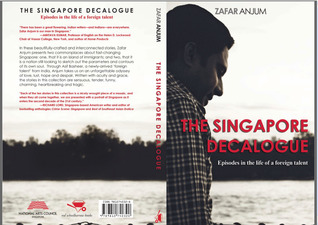
Singapore-based Indian author and journalist Zafar Anjum today has a wide and varied published body of writing to his credit. I'm proud of my first and longest standing writer buddy, and  look forward to congratulating him on many, many more books. Zafar recently had two books released: The Resurgence of Satyam (Random House India) and The Singapore Decalogue (Red Wheelbarrow Books, Singapore).  He has also authored Kafka and Orwell on China (Samshwords, 2011). His earlier works include a novel (Of Seminal Fluids, 2000) and a volume of translated poetry (My Silence Speaks, 2001). He has recently finished his second novel Murder in Clivesganj, a thriller set in a small town in India, which is awaiting publication. I've had the pleasure of reading excerpts from this literary mystery and hope to see the complete book in print soon.

His short stories have recently appeared in three anthologies, Love and Lust in Singapore, The Best of Southeast Asian Erotica and Crime Scene: Singapore.  Zafar’s journalism and fiction have appeared in The South China Morning Post (Hong Kong), Today (Singapore), India Se (Singapore), The Bangkok Post (Thailand), Jakarta Globe (Indonesia), The Hindustan Times (India), The Times of India (India), Tehelka (India), The Pioneer (India), Outlook (India), Mainstream (India), China Daily (China), The Little Magazine (India), Little India (US), Malaysiakini.com (Malaysia), Small Spiral Notebook (US), Jamini (Bangladesh) and The Six Seasons Review (Bangladesh), among others.
He is also the founder-editor of Kitaab, a website dedicated to Asian writing in English. Currently, he co-edits a global website for writers, Writers Connect.

The Arts Creation Fund grant from Singapore’s National Arts Council for writing The Singapore Decalogue came to Zafar from "out of the blue. I had applied without any hope, and I could not believe it when I got it," Zafar says. "There was huge competition. I was the first Indian PR (permanent resident) to get this grant, if I am not mistaken. It gave me confidence and lot of push when I needed it most."

The Singapore Decalogue"In this collection of short stories, I have tried to create vignettes of life in Singapore. This is my tribute to this city state, which has built its social capital with great wisdom, civic sense, and quotidian practicality...
 
"In these stories, I have tried to portray the hopes and frustrations of a few interconnected characters (that was truer for the earlier draft when the characters were varied). The bustling metropolis attracts all kinds of people who want to make a life here. What happens to their dreams? What kind of struggles do they go through? Do they feel alienated? What do they love about the city? And so on.
Through the panoply of characters, mainly built around a main character, Asif Basheer, an aspiring poet from India, I have woven together a web of stories that throw light on various contemporary themes. The initial aspiration, following in the footsteps of Tolstoy and the Polish filmmaker Krzysztof Kieslowski (especially his film cycle, The Decalogue), was to explore themes based on the Ten Commandments, but I finally transformed the idea. I was anxious, even afraid, that the stories might come across as too moralistic or formulaic if I went down that route. Nevertheless, my moral concerns about making choices in life still shaped and informed the stories in The Singapore Decalogue."

The protagonist in these tales is Asif, a poet. "Whatever poetry he had written had remained unpublished. "In this world, it does not matter what you know. What matters is who you know," Asif tells himself. He comes to Singapore with an attractive job, and great hope that lady luck will smile upon him at last in this land of opportunities. Yet ominous dark clouds creep up to steal his sunshine. His company is under investigation, and tension is in the air. Meanwhile, this good-hearted young man from small town India takes in the sights and sounds of a brave new world. He shares his experiences with his wife Mariam, how "the Singapore he had heard of as a little boy, the place from where the Singapore banana used to come from, was no more a provincial backwater but a new age metropolis; a city put together out of raw jungle by sheer human will and imagination."

With his new friends, Asif explores the wonders of Singapore.He smiles to his pretty Filipina neighbours out of courtesy, hoping to spread positive vibes around him in an alien country. He notes the cool responses to his smiles and to his job application, and knows that the colour of one's skin matters as much and sometimes more, that an impressive resume to wily employers like Mr Fong.   Asif'ssensitive mind sees beyond the glitz and glamour and feels for poor bar girls compelled to please shady clients for money they need to support the families they love. Asif knows the money-making culture dominates Singapore, as it does in the rest of the world. Yet he sees the people around him with humane empathy.

Meanwhile, the mysterious Black Monk appears, reappears and vanishes, tossing enigmatic pearls of advice at our hero during major turning points in his life. He compels Asif and the reader to ponder the human dilemma.

Knowing as I do of some of Zafar's personal experiences during the last decade, I can see a little of him and his own perception in some of the characters and situations in these stories. In fact most of us writers put a bit of ourselves into the stories that we write. But Zafar's tales are pure fiction. The characters stand as convincing individuals in their own right. The writer's own ideas enrich a consummately crafted artistic work, while the writer himself remains far in the background as the creator of it all.

During one of our many exchanges, Zafar had said to me," It has definitely porous boundaries, fact and fiction merge. It happens with me too.
Over the years, I have seen that I am able to get into (how successfully--that I don't know) other people's minds more easily and write less personal stories. Maybe that is part of how we grow up as writers. Maybe we get more confident over time..."

I see that growth and confidence happening right now, in this very book.

"I had started The Singapore Decalogue first," Zafar says. "Meanwhile, I was also chasing the Satyam story. The Satyam scandal became a global business story pretty quickly after it hit the headlines in India in 2009. After all, it was India’s fourth largest outsourcing company and it was also listed on the Nasdaq in the USA. The Indian growth story was being keenly watched in the outside world and Satyam’s fall was not a blip. It grabbed eyeballs everywhere as it seemed to puncture the ‘India Shining’ story outside India. India, which was then a rising and shining outpost of globalization in Asia, suddenly had this blot on its resplendent reputation. Seemingly all was lost but not quite..

Personally, I see the story of Satyam’s turnaround as a positive story. This was a unique example to come from a place where corruption has been seen to be endemic. In the West, many companies have melted away after falling victim to financial scandals. The example of Enron comes to mind. Satyam survived a deadly implosion and how quickly it bounced back on its feet—that is an inspiring story to come from India where some much negativity floats around. That’s why I decided to tell the story of Satyam’s bouncing back."

Zafar and I finally met in the real world in January 2012, when research on the Satyam saga brought him to Bangalore. A warm, soft-spoken man with a sense of self-deprecatory humour, he brought a whiff of fresh air into a world crowded by the self-absorbed. I noted his old-worldy pehle aap courtesy, no put on airs, but quiet sincereity and straight-from-the-heart goodwill. His sense of fun and adventure peeped out when he ordered pungent Andhra style chicken with 'gunpowder' on the side. There we are dousing the fire on our tongues with ice cream on a cool winter day, while his friend graciously captured the moment with a click.
 

Monday, January 28, 2013

preserving our heritage

India’s rich legacy of art, architecture, ideas and ideals has been built up over many thousands of years. But today, how many of us pause to appreciate our common cultural inheritance? Our cultural tradition is widely praised in distant foreign lands. It offers humanity a beacon of hope from its dangerous course of rampant greed and aggressive rivalry. Meanwhile, Indians like us focus our energies upon the rat race.

We are so immersed in the daily grind of making money and competing with neighbours that we don’t even find time to visit our parents and relatives. Foregoing a weekend at malls and resorts to visit places of historic interest? Browsing through museums to view glorious relics of our cultural heritage? Not for us, thank you!

When we do get around to visiting our ancient monuments, we scratch our names on timeless relics and leave behind trails of plastic and litter. How can our children learn to appreciate our culture and heritage if we ourselves are callous? Does our general apathy and lack of appreciation for our heritage stem from some ingrained deficiencies within us? Or, are we overwhelmed by the vastness of it all?

Perhaps lack of awareness and perception makes us like the proverbial blind men examining an elephant. We are conscious of our heritage only in bits and pieces, and are unable to fully grasp its significance.

India’s cultural legacy is threatened from many quarters. Overpopulation, natural forces, unbalanced town planning and growth, and wanton human greed are major factors in the gradual degradation of historic monuments and spaces of natural diversity and beauty. The writing on the crumbling walls is clear wherever we look.
...
India’s cultural heritage is not restricted to ruined monuments or musty showcases in museums.

It is up to us to see that it continues to be an integral part of our daily lives. Our philosophical traditions can continue to guide us and nurture our spirits in these times of violence and greed. Small shrines and structures connected with local heroes can be a rallying point for community feeling and pride. In historic cities such Jaisalmer or Delhi’s walled city, people continue to live and work within and around heritage buildings. In 2003, the ASI commissioned an Integrated Management Plan for the entire Vijayanagara site.
...
Small but sincere efforts from individuals like us can add up to far-reaching benefits for our heritage. As individual parents or teachers, we can help by introducing young people to our heritage through interesting books, films, and trips to heritage sites. We can take part in heritage walks, and even organise them in our own communities. As professionals, we can facilitate our employers to maintain heritage sites as part of corporate social responsibility initiatives.

Technology has made information-sharing more efficient than ever. We can use it to connect with like-minded people not only in India, but across the globe, and learn more about foreign cultures. Scholars and museum curators are no longer the sole authorities on matters relating to our heritage. We too can participate in spreading knowledge about our heritage, and share our personal insights and perspectives.

Read my detailed piece in Sunday Herald

Monday, January 14, 2013

The Skinning Tree, book review

Buy The Skinning Tree: Book

Picador India    Rs.499/-

Offering an insight into a tortured boy’s psyche, Srikumar Sen’s debut work highlights the Empire’s flaws. “Murder was the plaything of us kids. We fooled with the idea of killing like some kids fool with fire.” These crisp, loaded sentences draw readers into a unique and superbly crafted novel about imagination, regimentation, conscience, life, death and the haunting ghosts of memory. Eight-year-old Sabby lives a privileged life in Calcutta during the World War II.

To protect their child from the threat of Japanese invasion, Sabby’s parents pack him off to a remote school run by English missionaries. Sabby’s home was an island of “Victorian and Venetian opulence” in a bright and sunny, utterly Indian street with “smells and shouts in the air and saris drying”. Genteel guests gathered to play cards at “little table islands around little island minds”.

...When Sabby arrives alone and friendless to the bleak world of St Piatus, he can no longer push aside unpleasant thoughts as he could in Calcutta. In St Piatus, the boys are brutalised emotionally and physically by their misguided teachers. Sabby and his friend have to face the pain of “being controlled by claps and instructions”. The children become inured to pain, and react by not wanting to “inflict pain back, just make you disappear like the vanishing morning mist over the Ghor hills”.

The rough boys of St Piatus come from good families, and are “naturally callous and unquestioning” when it comes to killing. In this book, the author presents a broader perspective, probing how boys who can share treats, stand up for their friends and love tree snakes as pets, are roughened by the treatment they receive into mercilessly killing birds and animals around them. They gradually progress with chilling logic to murderous feelings towards their harsh teachers.
...
 St Piatus aims to mould children through this same fear and contention, to become ferocious standard bearers of the Empire.

In the end, “Fate was a gloating hoodlum.” The enforcers of authority are themselves victims of the system. Despite their own rough conditioning, they also retain vestiges of compassion and humanity. After punishing Sabby with customary mindless harshness, a Brother learns that Sabby was upset about his grandmother’s death. He then prays and offers Sabby a colourful prayer card for solace.
...
The prose flows smoothly overall, but occasionally the narration is jarring and confusing; “Because of his anglicised outlook, the result of his parents’ failure to nurture his Bengali heritage owing to their surrendering to the social demands of a British commercial world, he was always uncomfortable with Indian situations and customs which he didn’t understand or was unfamiliar with; what he didn’t want to see didn’t exist.” These bumps are compensated by evocative, nuanced passages, conveying vivid sensory images and multiple layers of meaning.

The novelist portrays a moral landscape, not in black and white, but in multiple shades and colours. This delicious complexity makes this book memorable, as does the ray of hope with which the story ends. Despite all his harsh conditioning, Sabby’s conscience and imagination continue to haunt him repeatedly, “like touching a scar where all feeling is dead, but isn’t.”

My detailed review is published in Sunday Herald

Tuesday, January 01, 2013

Coffee house adda

New Year's Eve was spent in enlightened company. Fellow Zubaan author friends Anil Menon and Payal Dhar and I met up to exchange notes on the stories cooking on our keyboards, and caught up with everything else.

Psst! Here's the news straight from the horses' mouths. Expect more great fiction from these talented writers in the year ahead. Payal's A Shadow in Eternity trilogy Shadow series Satin  kept readers young and old enthralled. Maya Subramanyam's adventures are continuing in Eternity, and we can hope to read about them soon. Meanwhile, her most recent books, Satin and There's a Ghost in My PC are drawing more appreciative readers. If you haven't read them yet, do it soon.

  Buy Book The Beast With Nine Billion feet by Anil Menon Buy Book Breaking The Bow: Speculative Fiction Inspired By The Ramayana by Anil Menon, Vandana SinghAnil was busy jointly selecting and editing the mind-blowing stories in Breaking the Bow, which offer original and highly imaginative alternate takeoffs on the Ramayana. He's also been pegging away on a major work of speculative fiction, aimed at adults this time. It's a complex and subtle story, he says, the speculative elements take a different turn from what we experienced in his first book, The beast With Nine Billion Feet. Will we see a sequel to 'Beast'? Anil smiles enigmatically, keeping us guessing and hoping.

Baaton baaton mein, we discovered that all of us can look forward to seeing our stories together in an anthology of love stories for older teens and adults, forthcoming from Scholastic

Steaming coffee and snacks at good old India Coffee House helped spread the bonhomie.
 This favourite haunt of yesteryear is now on a new location on Bangalore's Church Street. But the warm and cosy atmosphere remains the same, right down to the quaint furniture, slightly tarnished mirrors on blue distempered walls, and cheerful waiters. Not to mention the old favourites on their menu.

Coffee, much talk and browsing through bookstores later, it's time to take leave. A lovely note to end the old year and look forward with hope to 2013.

Sunday, December 02, 2012

Baluchari sarees, timeless weaves

During a recent visit to the beautiful town of Bishnupur in West bengal's Bankura District, I was fascinated by the sight of local weavers creating magic on their looms.

Intricate Baluchari saris are works of art woven in silk. The borders and pallu are embellished with exquisite motifs inspired by the epics, mythology and traditional texts, as also scenes from courtly life. Each panel of these delicately woven sarees tells a timeless story. A single sari can depict an entire episode from the Mahabharata or Ramayana, woven into its border and pallu. The magical weaves with their centuries-old tradition continue to enchant through generations. They take pride of place in the heirloom collection of Bengali women.

Baluchari sari. Photo by authorTraditional Baluchari sarees are woven in the history-steeped town of Bishnupur, in West Bengal’s Bankura district. There are several clusters of weavers here who continue to create enchanting sarees. Haradhan Bishoi oversees one such setup, where eight or nine weavers work at any given time. The mulberry silk is sourced locally, he tells us. The entire process, from rearing silkworms, to spinning and dyeing the yarn, and then designing and weaving sarees, is done locally. The fine and soft local silk has a unique lustre. To make the yarn supple and shiny, it is boiled in a mixture of soda and soap and then dyed. Designing these sarees requires elaborate planning and execution. Each saree takes two expert weavers, working by turns, around a week to weave. The more complex ones can take much longer. The sarees are hand-woven on jacquard punch-card looms. Creating intricate designs for the border, butis and pallus of Baluchari sarees is an elaborate process. The design is drawn on a graph paper and then punched on cards. After punching, these cards are joined in sequence and fixed in the jacquard machine. These coded and punched chains of jacquard cards control the movement of the warp on the loom to create finely woven details in silk.

My published article may be read in Sunday Herald

I've received several inquiries from readers for Bishnupur contacts and replied individually. For others who might be interested, here are the contacts of Haradhan Bishoi.  They have an excellent collection of saris for all budgets, for sale wholesale and retail.

Anuvab, manufacturers of Baluchari and Swarnachari sarees.
Chinnamasta
Bishnupur,
Dist. Bankura,
West Bengal

phone; 03244-256308

hope this helps,
M S

Friday, November 09, 2012

active ageing; is the best yet to be?

“Grow old along with me! The best is yet to be,”

Robert Browning’s immortal words now ring truer than ever. The time is ripe to celebrate the golden years. People are living longer and healthier, thanks to improved healthcare and nutrition. Scientific advances are banishing dreaded diseases and prolonging life expectancy. Research on the human genome, for example, is poised to take us beyond merely fighting diseases, and perhaps enable our thathas and ajjis to race like Usain Bolt.

Seniors are growing into a force to reckon with. In almost every country, the proportion of people above 60 years is growing faster than any other age group, as a result of both longer life expectancy and declining birth rates. India has an estimated 100 million elderly persons, which is the second largest in the world. The population of senior citizens in India is projected to reach 179 million by 2031. By 2050, the world’s population aged 60 and over is expected to more than triple from 600 million to 2 billion. The world is growing older, and hopefully wiser. Within the next five years, the number of adults aged 65 and over will outnumber children under the age of five.

Our very own Big B’s recent 70th birthday celebrations has highlighted the glamour, success, aspirations and joys of folks who seem to be growing more vibrant with passing years. Yet Baghban, a 2003 film starring Amitabh Bachchan, also portrayed the pitfalls sadly faced by many Indian seniors. They do their best to provide for their children. But, once the parents are no longer able to support themselves, their children often consider them as a liability. Abandonment and abuse of elders is on the rise, not just in remote western cultures, but right in our own neighbourhoods. As life spans are increasing, the menace of age-related debilities like Alzheimer’s add to the woes of elders.
Let’s consider the privileges and problems of ageing, and see how the balance sheet tallies. Read my  full article published in Sunday Herald
 

Tuesday, November 06, 2012

random reads in a lighter vein

Buy Birds, Beasts and Bandits: 14 Days with Veerappan Birds, Beasts and Bandits: 14 days with Veerappan
Authors; Krupakar and Senani    Tranlator: S. R. Ramakrishna    Penguin Rs250/-

Truth can not only be stranger than fiction, real-life escapades can be filled with excitement, insights and even some chuckles. It was just another day at work for wildlife photographers Krupakar and Senani, who were clicking away at the creatures of Bandipur National Park. Veerappan, the dreaded poacher and sandalwood bandit mistook them for important government officials and kidnapped them. The photographers were herded by the bandits to a life on the run through the forest. They got a chance to closely observe the rich variety of wildlife in the forest. Close contact with the wild and dangerous bandits was just as enlightening. The terrible Veerappan, reputed to have murdered several hundred people, shows glimpses of his intelligent human side. He and his gang exemplify all the complexities of human nature. The narration is lively and laced with humorous touches. Overall a refreshing and informative read.

Buy The Shadow Throne: BookThe Shadow Throne    By Aroon Raman   Pan   Rs.250/-
An exciting thriller with loads of twists and turns that will keep readers on the edge of their seats. What began as a murder enquiry soon morphs into a deadly game of hide-and-seek within the shadowy world of Pakistan’s ISI and India’s RAW; and Chandra, his friend history professor Meenakshi Pirzada and Hassan find themselves in a race against time to avert a sub-continental nuclear holocaust. As the action moves to its hair-raising climax among the Hindu Kush Mountains of Afghanistan, Chandra must face up to the fact that Inspector Hassan is not all that he seems…A riveting thriller set right in our  own backyard and starring people we might know in passing.

Buy Coup D'Etat: BookCoup D'Etat   Author: Ben Coes   Pan   Rs.350/-
When a brutal attack in Kashmir causes the breakdown of fragile peace between India and Pakistan, a rapidly escalating shooting war spins out of control. As the conflict reaches a deadly point of no return, it becomes clear that India is only days from resorting to the kind of attack that would put world peace at peril. With the world on the brink of disaster, the US collaborates to send its very best people to help avert an international crisis.
Not a memorable thriller. Credibility can stretch a bit too thin at times. A light pageturner for a rainy weekend or to while away the time at airport lounges.

Buy The Onus Of Karma The Onus of Karma  Author: Rudra Krishna   Penguin  Rs. 250/-
Swashbuckling adventure meets mythological fable in eighteenth-century Madras. The collection of kingdoms that will soon be India, is in turmoil. The eAst India Company controls much of the north and has ambitions to take over the entire subcontinent. In the south, Haider Ali and his son Tipu Sultan furiously resist the advances of the British.

In these desperate times, Ramaswami Aiyar, scion of the family which has for generations been the temple priests of an obscure little village near Kanchipuram, decides that the pious life is not for him and joins the police force. He soon discovers that the temple—and the family— he rejected protect the srichakra, the divine wheel given to man by Lord Shiva himself. The srichakra, symbol of Dharma on earth, is an instrument of tremendous power, with potential for great good or great evil, and both the British and Haider Ali want it. And even as Ramaswami finds himself cast as protector of the chakra, he understands the role of destiny in his life and the inevitability of fate.

There's been a clutch of books in this genre of late, which have garnered immense popularity. This story is tightly-written and an entertaining, worthwhile read. Also, it's set in historical South India, and this probably makes it different from the other mythology based fantasies.

Buy The Masala Murder: Book  The Masala Murder  Author: Madhumita Bhattacharyya   Pan  Rs.250/-

A brand new and lively, well-written read.There's mystery, and emotion, and romance with a "Prince Charming on a rather greasy charger'", and the fast paced action happens in a very Indian milieu. The cover seems at first glance to be another instalment of the Inspector Singh investigates series. There could have been more originality and distinctiveness there.

Reema Ray, private investigator and food writer didn’t set out to become Calcutta’s expert in infidelity cases, but that is where her detective agency has taken her. When the deceit gets too much, she finds a welcome distraction and a means to pay the bills by becoming a food critic for a magazine.
Her worlds collide when a gourmet provisions supplier she had once profiled ends up dead under suspicious circumstances. Her food-obscured nose can still sniff out a murder, and she decides to launch her own investigation. Then her ex-boyfriend shows up at her doorstep when he finds himself being treated as prime suspect in the kidnapping of his own wife! Suddenly, Reema is handling not one but two cases. With no access to official evidence, she relies on the meddling group of do-gooders she has dubbed the Calcutta Crime-Fighter’s Club. If all this wasn’t trouble enough, the alluring Shayak Gupta turns up around every corner, and while she can’t seem to resist him, she doesn’t believe a word he says either.
This first Reema Ray mystery follows a comical ride through Calcutta as Reema comes to terms with her feelings about the men in her life while whipping up delicious meals and being beset by criminals and the police alike!


Thursday, November 01, 2012

Black Ice and Mahmud Rahman

Memories Across Borders
This novel by one of Bangladesh’s leading writers exemplifies the little-publicised-but-striking writing being produced on the other side of our nation’s borders.
Mahmudul Haque (1941 – 2008), was a critically acclaimed author of 10 novels and numerous short stories. His life illustrates the close cultural ties binding India and Bangladesh. Haque spent his childhood in Barasat outside Kolkata, and his later years in Dhaka. He considered Black Ice (Kalo Baraf in Bengali), to be his favourite work.

First published in 1977, in Bengali, Black Ice draws upon Mahmudul Haque’s personal experience of the Partition to deeply probe the invisible scars bequeathed to the inheritors of the political divide. The book is filled with protagonist Abdul Khaleq’s childhood pain and distress of leaving his country. The author’s family immigrated to East Bengal (formerly East Pakistan and now Bangladesh) when he was a child. There are some clear parallels between the fictional story and the author’s personal experiences of the Partition. “My childhood was strife-ridden, filled with the anguish of the Partition, filled with the pain of being forced out of one’s homeland.” Nevertheless, Black Ice is a work of fiction. “That’s not based on my life,” the author says. “I am not there in it.”

My detailed review of this book is published in Books and More

 The story behind this English translation is interesting in itself. Mahmud Rahman is a talented writer and author of Killing the Water. My review of the book here. Rahman shares his personal anecdotes about the author, and how this translation came about:
 
"The papers in Dhaka bring out weekly literature pages and late in November 2006 I read an interview with an author who was unknown to me. This interview drew me in.
 In my first attempt I tried out the familiar bookshops in Dhaka’s New Market. No one had his books. Most salesmen were not familiar with Mahmudul Haque. I lucked out a couple of weeks later, at Dhaka’s second annual book fair, a smaller one than the large February one. They had most of his books and I bought a bunch of them.

The very next day I began to read Mahmudul Haque’s novel Nirapod Tondra. I liked what I was reading and went out to the bookshops at Aziz Market to get more of Mahmudul Haque’s books. By now I had all but one of his novels and his collection of stories Protidin Ekti Rumal. I read this and translated a story from it. Soon after, a second novel Matir Jahaj. And then Kalo Borof. I observed in my journal, “I think it’s a powerful little novel, definitely worth translating.” I decided I would chose that one unless another book turned out to be more appealing. In the meantime I had begun to translate the title story of Protidin Ekti Rumal.

I also began to find a way to make contact with the author.
Right around this time I read the final two of Mahmudul Haque’s novels Oshoriri and Jibon Amar Bon. I was impressed by the lack of romanticism about 1971 in Jibon Amar Bon. In Oshoriri, I admired how much he had packed into this novel of 73 pages. I realized the he was indeed a master of the short novel. After I finished reading all the novels, I settled on Kalo Borof as the novel that seemed the ideal one for me to translate. I would have preferred Jibon Amar Bon, but I was at that point hesitant to try a novel written in much more complex language.


Finally on August 7, 2007 I dialed Mahmudul Haque’s number.
I said, “Amar nam Mahmud Rahman. Ami lekha likhi kori ar apnar golpo onubad korte shuru korechhi. Chhera Taar Daily Star-e chhapa hoyechhilo January mashe. Ekhon ami Protidin Ekti Rumal onubad korchhi. Ekta uponnash o onubad korar icchya ache. Apnar shathe dekha kora shombhob?”
He was quiet and had not interrupted me with any reaction while I had jabbered on. In a plain voice, he said, “Ashen.”
 
I went the next afternoon and easily found the building. IHe had me sit and then excused himself for a moment. I sat in a living room crowded with furniture, chairs, coffee and side tables, and bookshelves where the books seemed to have lain undisturbed for a while. On the other wall I could see a photo of him with a young boy. There was also a small writing desk in the living room but it was piled high with books and magazines, all old and dust covered.
He returned after putting on a tunic. And we sat down and he wouldn’t let me leave for five hours. We talked about his schooldays, the places he had lived, the history of Dhaka, his writing, his not writing, his fascination with the rural landscape of Bikrampur, his family history, his mother, his interest in gemstones, his disillusionment with Bangalis, and numerous other threads of interest. I realized he was a thoroughly engrossing storyteller.


After the initial meeting, he invited me to return and we would soon settle into a routine where I would show up about every two weeks.
That’s sad to me, that Mahmudul Haque the author, his wife Kajol who encouraged me to translate him, his brother Nazmul Haque who helped me solve an important puzzle and looked forward to the translation coming out, they all died before being able to see the final book. But I’m glad I’ve been able to share it with the children who live in Toronto and Los Angeles."