

Picador India Rs.499/-
Offering an insight into a tortured boy’s psyche, Srikumar Sen’s debut work highlights the Empire’s flaws. “Murder was the plaything of us kids. We fooled with the idea of killing like some kids fool with fire.” These crisp, loaded sentences draw readers into a unique and superbly crafted novel about imagination, regimentation, conscience, life, death and the haunting ghosts of memory. Eight-year-old Sabby lives a privileged life in Calcutta during the World War II.
To protect their child from the threat of Japanese invasion, Sabby’s parents pack him off to a remote school run by English missionaries. Sabby’s home was an island of “Victorian and Venetian opulence” in a bright and sunny, utterly Indian street with “smells and shouts in the air and saris drying”. Genteel guests gathered to play cards at “little table islands around little island minds”.
...When Sabby arrives alone and friendless to the bleak world of St Piatus, he can no longer push aside unpleasant thoughts as he could in Calcutta. In St Piatus, the boys are brutalised emotionally and physically by their misguided teachers. Sabby and his friend have to face the pain of “being controlled by claps and instructions”. The children become inured to pain, and react by not wanting to “inflict pain back, just make you disappear like the vanishing morning mist over the Ghor hills”.
The rough boys of St Piatus come from good families, and are “naturally callous and unquestioning” when it comes to killing. In this book, the author presents a broader perspective, probing how boys who can share treats, stand up for their friends and love tree snakes as pets, are roughened by the treatment they receive into mercilessly killing birds and animals around them. They gradually progress with chilling logic to murderous feelings towards their harsh teachers.
...
St Piatus aims to mould children through this same fear and contention, to become ferocious standard bearers of the Empire.
In the end, “Fate was a gloating hoodlum.” The enforcers of authority are themselves victims of the system. Despite their own rough conditioning, they also retain vestiges of compassion and humanity. After punishing Sabby with customary mindless harshness, a Brother learns that Sabby was upset about his grandmother’s death. He then prays and offers Sabby a colourful prayer card for solace.
...
The prose flows smoothly overall, but occasionally the narration is jarring and confusing; “Because of his anglicised outlook, the result of his parents’ failure to nurture his Bengali heritage owing to their surrendering to the social demands of a British commercial world, he was always uncomfortable with Indian situations and customs which he didn’t understand or was unfamiliar with; what he didn’t want to see didn’t exist.” These bumps are compensated by evocative, nuanced passages, conveying vivid sensory images and multiple layers of meaning.
The novelist portrays a moral landscape, not in black and white, but in multiple shades and colours. This delicious complexity makes this book memorable, as does the ray of hope with which the story ends. Despite all his harsh conditioning, Sabby’s conscience and imagination continue to haunt him repeatedly, “like touching a scar where all feeling is dead, but isn’t.”
My detailed review is published in Sunday Herald


 Anil was busy jointly selecting and editing the mind-blowing stories in Breaking the Bow, which offer original and highly imaginative alternate takeoffs on the Ramayana. He's also been pegging away on a major work of speculative fiction, aimed at adults this time. It's a complex and subtle story, he says, the speculative elements take a different turn from what we experienced in his first book, The beast With Nine Billion Feet. Will we see a sequel to 'Beast'? Anil smiles enigmatically, keeping us guessing and hoping.
 Traditional Baluchari sarees are woven in the history-steeped town of Bishnupur, in West Bengal’s Bankura district. There are several clusters of weavers here who continue to create enchanting sarees. Haradhan Bishoi oversees one such setup, where eight or nine weavers work at any given time. The mulberry silk is sourced locally, he tells us. The entire process, from rearing silkworms, to spinning and dyeing the yarn, and then designing and weaving sarees, is done locally. The fine and soft local silk has a unique lustre. To make the yarn supple and shiny, it is boiled in a mixture of soda and soap and then dyed. Designing these sarees requires elaborate planning and execution. Each saree takes two expert weavers, working by turns, around a week to weave. The more complex ones can take much longer. The sarees are hand-woven on jacquard punch-card looms. Creating intricate designs for the border, butis and pallus of Baluchari sarees is an elaborate process. The design is drawn on a graph paper and then punched on cards. After punching, these cards are joined in sequence and fixed in the jacquard machine. These coded and punched chains of jacquard cards control the movement of the warp on the loom to create finely woven details in silk.
 “Grow old along with me! The best is yet to be,”
  Birds, Beasts and Bandits: 14 days with Veerappan
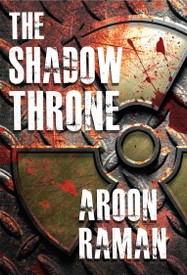 The Shadow Throne By Aroon Raman Pan Rs.250/-
 Coup D'Etat Author: Ben Coes Pan Rs.350/-
 The Onus of Karma Author: Rudra Krishna Penguin Rs. 250/-
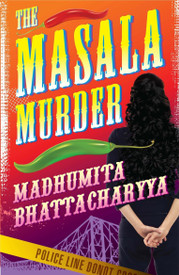 The Masala Murder Author: Madhumita Bhattacharyya Pan Rs.250/-
 During a recent visit to Kolkata, I spent an afternoon exploring College Street. Rows upon rows of cluttered bookstalls, jostling browsers, the honks and rattles of quaint trams and yellow Ambassador taxis... the entire scene seems rooted in the past. A day and age when people had the time and inclination to curl up with books; when eager readers searched for that special book they had always wanted to read.
  The fifth of June is World Environment Day. So what’s the big deal? Every day seems to be dedicated to something, from proclaiming love from the rooftops to protecting axolotls or orangutans.


 I recently had the pleasure of reading The Yellow Emperor's Cure by Kunal Basu. In this engaging historical novel, Kunal Basu takes us into China over a century ago, teetering on the cusp of the Boxer Rebellion. Exotic sights, sounds and tastes, the political equations and clash of cultures of the past play out in the backdrop as Dr Antonio traverses the world seeking a cure for a deadly disease.
  Occasionally doing a Google search of one's name can throw up all sorts of suprises.