
New Year's Eve was spent in enlightened company. Fellow Zubaan author friends Anil Menon and Payal Dhar and I met up to exchange notes on the stories cooking on our keyboards, and caught up with everything else.
Psst! Here's the news straight from the horses' mouths. Expect more great fiction from these talented writers in the year ahead. Payal's A Shadow in Eternity trilogy

 kept readers young and old enthralled. Maya Subramanyam's adventures are continuing in Eternity, and we can hope to read about them soon. Meanwhile, her most recent books, Satin and There's a Ghost in My PC are drawing more appreciative readers. If you haven't read them yet, do it soon.

 Anil was busy jointly selecting and editing the mind-blowing stories in Breaking the Bow, which offer original and highly imaginative alternate takeoffs on the Ramayana. He's also been pegging away on a major work of speculative fiction, aimed at adults this time. It's a complex and subtle story, he says, the speculative elements take a different turn from what we experienced in his first book, The beast With Nine Billion Feet. Will we see a sequel to 'Beast'? Anil smiles enigmatically, keeping us guessing and hoping.
Baaton baaton mein, we discovered that all of us can look forward to seeing our stories together in an anthology of love stories for older teens and adults, forthcoming from Scholastic
Steaming coffee and snacks at good old India Coffee House helped spread the bonhomie.
 This favourite haunt of yesteryear is now on a new location on Bangalore's Church Street. But the warm and cosy atmosphere remains the same, right down to the quaint furniture, slightly tarnished mirrors on blue distempered walls, and cheerful waiters. Not to mention the old favourites on their menu.
Coffee, much talk and browsing through bookstores later, it's time to take leave. A lovely note to end the old year and look forward with hope to 2013.
Psst! Here's the news straight from the horses' mouths. Expect more great fiction from these talented writers in the year ahead. Payal's A Shadow in Eternity trilogy
kept readers young and old enthralled. Maya Subramanyam's adventures are continuing in Eternity, and we can hope to read about them soon. Meanwhile, her most recent books, Satin and There's a Ghost in My PC are drawing more appreciative readers. If you haven't read them yet, do it soon. Anil was busy jointly selecting and editing the mind-blowing stories in Breaking the Bow, which offer original and highly imaginative alternate takeoffs on the Ramayana. He's also been pegging away on a major work of speculative fiction, aimed at adults this time. It's a complex and subtle story, he says, the speculative elements take a different turn from what we experienced in his first book, The beast With Nine Billion Feet. Will we see a sequel to 'Beast'? Anil smiles enigmatically, keeping us guessing and hoping.Baaton baaton mein, we discovered that all of us can look forward to seeing our stories together in an anthology of love stories for older teens and adults, forthcoming from Scholastic
Steaming coffee and snacks at good old India Coffee House helped spread the bonhomie.

Coffee, much talk and browsing through bookstores later, it's time to take leave. A lovely note to end the old year and look forward with hope to 2013.


 Traditional Baluchari sarees are woven in the history-steeped town of Bishnupur, in West Bengal’s Bankura district. There are several clusters of weavers here who continue to create enchanting sarees. Haradhan Bishoi oversees one such setup, where eight or nine weavers work at any given time. The mulberry silk is sourced locally, he tells us. The entire process, from rearing silkworms, to spinning and dyeing the yarn, and then designing and weaving sarees, is done locally. The fine and soft local silk has a unique lustre. To make the yarn supple and shiny, it is boiled in a mixture of soda and soap and then dyed. Designing these sarees requires elaborate planning and execution. Each saree takes two expert weavers, working by turns, around a week to weave. The more complex ones can take much longer. The sarees are hand-woven on jacquard punch-card looms. Creating intricate designs for the border, butis and pallus of Baluchari sarees is an elaborate process. The design is drawn on a graph paper and then punched on cards. After punching, these cards are joined in sequence and fixed in the jacquard machine. These coded and punched chains of jacquard cards control the movement of the warp on the loom to create finely woven details in silk.
 “Grow old along with me! The best is yet to be,”
 Birds, Beasts and Bandits: 14 days with Veerappan
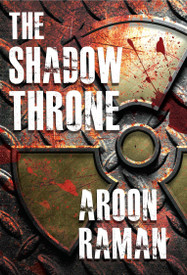 The Shadow Throne By Aroon Raman Pan Rs.250/-
 Coup D'Etat Author: Ben Coes Pan Rs.350/-
 The Onus of Karma Author: Rudra Krishna Penguin Rs. 250/-
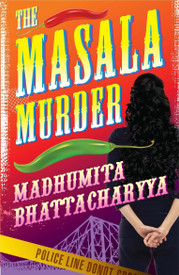 The Masala Murder Author: Madhumita Bhattacharyya Pan Rs.250/-

 During a recent visit to Kolkata, I spent an afternoon exploring College Street. Rows upon rows of cluttered bookstalls, jostling browsers, the honks and rattles of quaint trams and yellow Ambassador taxis... the entire scene seems rooted in the past. A day and age when people had the time and inclination to curl up with books; when eager readers searched for that special book they had always wanted to read.
 The fifth of June is World Environment Day. So what’s the big deal? Every day seems to be dedicated to something, from proclaiming love from the rooftops to protecting axolotls or orangutans.


 I recently had the pleasure of reading The Yellow Emperor's Cure by Kunal Basu. In this engaging historical novel, Kunal Basu takes us into China over a century ago, teetering on the cusp of the Boxer Rebellion. Exotic sights, sounds and tastes, the political equations and clash of cultures of the past play out in the backdrop as Dr Antonio traverses the world seeking a cure for a deadly disease.
 Occasionally doing a Google search of one's name can throw up all sorts of suprises.

 Say it loud. We're average and we're proud! Do we, as a society, worship the average and nurture mediocrity? Do we, with our actions and inactions, not only uphold the mundane and below-par, but also resist agents of change? Aren’t we guilty of huddling together in our comfort zones of the pedestrian mainstream? Don’t we often find ourselves systematically focusing our efforts on pretending that superlatives in any field simply cannot exist? We complacently justify ordinariness in every sphere of life. Mediocrity in public life and leadership, in books, or sports; this seems to be what the public wants and supports. But, does popular appeal alone justify shoddy work? Must we, Indians, continue to aspire to the lowest common denominator?