
The recent jubilation over the highest in a decade pass percentage in PU exams set me thinking. I shot of my opinion, and an excerpt from it was published in the letters section in Deccan Herald. Here's the complete, unedited version.
The
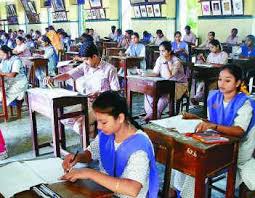
recent report on the pass percentage in the PU exams of 57.9% made headlines
for being the highest in the decade. Is this a matter of pride or worry? This raises an uncomfortable question of the
relevance of the current system. SSLC and PU exams are meant to set a benchmark
for the minimum knowledge a candidate must possess after schooling. In other
words they test whether the educational system has achieved its objective of
educating a child. It is not just a test of the child but of the system as
well. A student who scores 57.9 % in her exam is termed mediocre. Then what
does one say of a system of education that is proud to deliver 57.9% results?
A
thorough relook at the curriculum is necessary. Is it teaching what we want
children to learn? Emphasis on abstract theory with little mention of practical
application makes a curriculum difficult to grasp. Unless a curriculum aims to
promote better understanding of the subject, rote learning soon renders it
meaningless. A student who gets the impression of studies being devoid of
meaning and application looses interest in such an education. The numbers game where
marks are all that count, is an incentive for shortcuts. Interestingly Andhra
Pradesh Board has replaced marks with grades in this year’s Class X results.
It
is easy to blame government colleges with their well known deficiencies in
infrastructure and manpower. Karnataka
has numerous private colleges too. Undoubtedly they too contribute to some of
these failures despite having better resources. Coaching institutes have
proliferated in towns and cities offering to remedy the deficiencies of the
formal education system. Students still fail.
Exams
test a student’s performance of that hour. A system that includes evaluation of
student performance throughout the year will do much to reduce the “luck”
factor in exams. This would recognise consistency and provide feedback to both
teacher and student about those falling behind. Timely intervention could then
help them improve.
Exam
evaluators are an overburdened lot. With too many papers to evaluate and too
little time to do it, leaves the best person error prone. Great is their
responsibility in deciding the merit of a student. Their remuneration must
match their responsibility. A student who deserves to be failed also deserves to
know the reason why. This would help her identify her shortcomings and improve
next time, besides bringing transparency to the system.
Congratulations
are due to all those successful. Spare a thought for those who failed. In a
system unlikely to change in any hurry, family and friends are the last hope. A
family that understands that marks are not everything, will help the child who
failed to emotionally cope with a poor performance. A family that is supportive
and not judgemental is the best healer for all the agonies of these children.
It is to be remembered that no student intends to fail. Post results suicides
ritually follow declaration of results. We can but try our best and hope for a
better system. A system where no child should feel that life is not worth
living.


 I recently had the pleasure of reading The Yellow Emperor's Cure by Kunal Basu. In this engaging historical novel, Kunal Basu takes us into China over a century ago, teetering on the cusp of the Boxer Rebellion. Exotic sights, sounds and tastes, the political equations and clash of cultures of the past play out in the backdrop as Dr Antonio traverses the world seeking a cure for a deadly disease.
  Occasionally doing a Google search of one's name can throw up all sorts of suprises.
 Say it loud. We're average and we're proud! Do we, as a society, worship the average and nurture mediocrity? Do we, with our actions and inactions, not only uphold the mundane and below-par, but also resist agents of change? Aren’t we guilty of huddling together in our comfort zones of the pedestrian mainstream? Don’t we often find ourselves systematically focusing our efforts on pretending that superlatives in any field simply cannot exist? We complacently justify ordinariness in every sphere of life. Mediocrity in public life and leadership, in books, or sports; this seems to be what the public wants and supports. But, does popular appeal alone justify shoddy work? Must we, Indians, continue to aspire to the lowest common denominator?
  IT"S NOT IT _ TOOL (Chu Chu/OFOTO/Tasveer)
 As a
As a

 Indian minature paintings fascinated me from the first time I set eyes on them as a child in a lovely book in Lady Irwin School library. In later years, my little son and I would spend many holidays exploring Mumbai's Prince of Wales Museum. Their fabulous collection of Indian miniature paintings was among our favourite haunts. These intricately painted gems were marvellous down to the minutest detail. So many schools, each with their distinctive styles; so many wonders packed into tiny spaces. Who created them? What inspired them? What were their lives and times like?
  Man of a Thousand Chances
 We live in an unjust world where those who successfully present a certain image are given more prominence and respect. In an age of tapering attention spans, snap judgements are made and individuals labelled and slotted depending upon the brands they sport. Some of us may like to believe that we are valued for our inner qualities. But clothing as a means of self-expression is very much here to stay.


 I recently had the pleasure of reading The Exiles by Ghalib Shiraz Dhalla (Harper Collins, 2011, Rs.350)
 The Cousins