Creativity is allowing yourself to make mistakes. Art is knowing which ones to keep. Musings from someone who sees stories everywhere.

Monday, January 23, 2012

Law of Averages

Say it loud. We're average and we're proud! Do we, as a society, worship the average and nurture mediocrity? Do we, with our actions and inactions, not only uphold the mundane and below-par, but also resist agents of change? Aren’t we guilty of huddling together in our comfort zones of the pedestrian mainstream? Don’t we often find ourselves systematically focusing our efforts on pretending that superlatives in any field simply cannot exist? We complacently justify ordinariness in every sphere of life. Mediocrity in public life and leadership, in books, or sports; this seems to be what the public wants and supports. But, does popular appeal alone justify shoddy work? Must we, Indians, continue to aspire to the lowest common denominator?

On the flip side of the coin, what’s wrong with being average, which also means normal, ordinary and usual? Must we be tossed into some social compost pit because we aren’t all Gandhijis and Einsteins? Does anyone have the right to judge us for swaying to commonplace but catchy tunes or enjoying hastily-patched-together pulp fiction? Last, but not least, must ‘average’ necessarily be equated with lack of skill, intellect and overall abysmal lack of quality?

My long rant on the subject is published in Sunday herald

Wednesday, January 11, 2012

chinese photography

IT"S NOT IT _ TOOL (Chu Chu/OFOTO/Tasveer)


I recently had the pleasure of viewing an exhibition of contemprorary photogrpahy from China. One of the most ancient and progressive civilisations in the world, China is surrounded by an aura of mystery. Making giant strides in economic growth and technological progress, China continues to remain enigmatic to the rest of the world in many ways. An exhibition of the work of six contemporary Chinese photographers, which has been made possible by Glenfiddich, Tasveer and OFOTO Gallery, Shanghai, seeks to throw fresh light on the complex culture of China today.

Chu Chu’s series, ‘It’s Not it – Tool’, for example, shows everyday objects such as a wok, a spanner, scissors and a hammer from unusual perspectives, encouraging viewers to perceive them as objects of art transcending their mundane functionality. These larger-than-life images in black and white shades encourage an appreciation of their forms, rendering the familiar with fresh aesthetic appeal. Viewing these objects from unusual angles and perspectives, one wonders about the human stories behind the people who created and used them.
China is the world’s most populous country. Yet people are conspicuous by their absence in most of these photographs. What we see is things they have created and used; homes, skyscrapers, elevated roadways, tools and objects of daily use. Through these images, these Chinese photographers are exploring and responding to cultural and economic sea changes sweeping their land, and their effects on their deep-rooted cultural values. Works such as these have intrinsic artistic value. They do not pose direct criticism or political challenges, but are suggestive of wider issues, urging the viewer to ask far reaching questions and seek answers.  My detailed article is  published in Sunday Herald

Monday, January 02, 2012

wishlist for 2012

As a 

As a new year dawns, what do ordinary folks like us wish for ourselves and for the world? Here's my wish list for 2012, May democratic values and peace rule, may every child have proper food, healthcare, education and most of all, the hope to be born. And if we do follow our human instincts and end up nuking our earth or smothering it in noxious wastes, let us take heart. Let’s hope to colonise Mars and discover other habitable planets out there to explore, exploit and devastate. Read my detailed take in Sunday Herald
   

Friday, December 23, 2011

season's greetings

Neighbourhood kids of different faiths sang carols at our doorstep celebrating Christmas and welcoming 2012 with the Spirit of unity. Here are the cuties dressed as angels, magi and all. Taking a cue from them to wish all friends a wonderful Christmas and a fabulous 2012

Sunday, December 11, 2011

Reaching out beyond the void

The Empty Space
Title: The Empty Space
Author: Geetanjali Shree
Translator: Nivedita Menon
Publisher: Harper Collins India
Pages: 260
I recently had the pleasure of reading The Empty Space, a powerful novel about death, life, and the empty spaces in-between.
This stunning novel is far from a simple story which ''reveals itself on its own, predictably.'' The author deftly draws us into exploring the momentous empty spaces between life and death, between overwhelming tragedy and regeneration in these times of insurgency, senseless violence and killings.

A bomb explodes in a university café, blasting to smithereens 19 young lives, the promise they held, and the dreams of the loved ones who survived their deaths. The last mother to enter the café and identify her dead son takes home his remains packed in a box. She also returns with a three-year-old boy, who was found in a small empty space amidst the carnage, miraculously alive and breathing.

As the little survivor grows up and tells his story, the past “barges into the present and shifts life from its centre.” The parents of the dead boy are powerless to prevent the grey pall of their loss from withering “all the dreams and seeds and fruits and flowers and bees” of the present in one sweeping stroke. The parents and society refuse to see the
surviving child as an individual in his own right. Made to take over where the dead son left off, the traumatised child refuses to speak or eat. It is as though the dead boy and he are all mixed up.

“The new one just lies in his empty space, just lies there, who notices? It’s the old one who is buried again and again and then resurrected each time.” Entangled in memories of someone else, the parents may tend to his physical needs, but emotionally they are not with him. The dead son’s presence continues to control the family’s lives.

The characters are powerfully portrayed. Their emotions, their motivation, strike us like that bomb blast, forcing us to rethink the enigma of the human condition. The surviving boy’s character shines through the bleak landscape of the book. He refuses to be negated by that one incident that becomes the driver and the keeper of the rest of his life, to languish as the ghost of someone else.
What I liked best about this novel was the positive strength of the surviving child. Also, the translation is beautifully done. My detailed review is publsihed in:Sunday Herald

Tuesday, December 06, 2011

exquisite miniatures by Nainsukh

Expressive: Nainsukh was known for his ethereal style of painting.  Indian minature paintings fascinated me from the first time I set eyes on them as a child in a lovely book in Lady Irwin School library. In later years, my little son and I would spend many holidays exploring Mumbai's Prince of Wales Museum. Their fabulous collection of Indian miniature paintings was among our favourite haunts. These intricately painted gems were marvellous down to the minutest detail. So many schools, each with their distinctive styles; so many wonders packed into tiny spaces. Who created them? What inspired them? What were their lives and times like?

Many of our artists of yore are nameless and faceless. While some of their beautiful creations have survived the ravages of time, little is known about these individual artists. I recently attended the inaugural lecture for Tasveer Foundation’s lecture series by eminent art historian Prof B N Goswamy, who threw fresh light on this beautiful art form.

From the 17th to mid-19th centuries, artists of the Himalayan foothills or pahari region produced exquisite miniature paintings, which are a vital part of India’s artistic heritage. Foremost among them was Nainsukh, whom Prof B N Goswamy ranks among India’s finest miniature painters. Working in the 18th century, Nainsukh left behind a treasure trove of portraits, court scenes, hunting scenes and glimpses of daily life. In the 100-odd surviving paintings and sketches attributed to him, we see a deceptively simple world rife with complex subtleties. With an incredibly light yet masterly touch, Nainsukh’s paintings breathe life into magical and intensely human moments from times long gone.

Nainsukh was born in Guler, a tranquil place in the hills, and created many of his paintings there as well as in Jasrota. He painted in a fresh, realistic and ethereal style, marking a change from the earlier heritage of rich, bold colours, robust human figures and breath-taking stylised language of art. Nainsukh’s work is marked not by emphatic accents, but by soft, delicate tones.
They appear simple at first glance, but a closer look reveals subtle nuances brought out through skillfully executed precise lines. Nainsukh captured the beauty of the people and their emotions, and the verdant hills where they lived.

My detailed essay on Nainsukh can be read in Sunday Herald

Monday, November 14, 2011

spiders, spammers, sweet tongued flatterers

    
I haven't posted personal stuff here of late. I've mainly posted links to my published writing (yes' I wrote that stuff and they're my original ideas). But a recent deluge of fake 'comments' have urged me to speak out.

What is it with unscrupulous freeloaders and shameless self-promoters?

Every day for months, my blog's been swamped with thinly disguised 'comments' which are nothing but promos and links to the poster's e-commerce sites. These comments may be generated with plausible human sounding names by spiders and other mysterious creatures stalking cyberspace. But I'm human and can clearly see through the ruse.


Readers are most welcome to post genuine comments and generate legitimate and relevant discussions. BUT I do not encourage 'comments' here which have no connection with my blog's content, but are solely meant to promote sales of some on line stores.

My blog is not here for spammers to flood the comments space with free advertising.

Even if you add something like "content was useful" as a preamble to a promo of your commercial venture, such comments will be still be detected and sytematically deleted. Don't waste my time and yours.

If you want to promote your on line store for flowers, candy, gadgets or whatever, kindly advertise these in appropriate venues.

Sigh! and back to work.

Sunday, November 06, 2011

Fate and the individual as a shaper of his own destiny

Man of a Thousand Chances

Author: Tulsi Badrinath      Hachette

Why do the just and innocent suffer for no apparent fault of their own? And why do some people get away with murder most foul? Why are some blessed with more money than they know what to do with, while others are forced to lead a hand-to-mouth existence? These and allied questions, which most of us wonder about at some point in our lives, are examined in the course of this novel. At first glance, middle aged, greying, careworn Harihar Arora seems anything but heroic. Striving to rise above petty joint family rivalries where he is the underdog younger son,Harihar secures a job as assistant to the curator of the Madras Museum. He struggles to make ends meet on a modest salary, and plug the unforeseen places from where his money leaks away triumphantly. Settling his darling daughter Meeta into a happy marriage is his primary concern, and the means he adopts to arrange for the money fall on the wrong side of conventional morality.

Harihar is by turns both a victim and a mover of his own fate. Beneath the beguilingly simple surface of an interesting story are deeper philosophical questions which Harihar, and by extension, the reader, are compelled to examine. In the end, Harihar sees that “life, despite the worst of circumstance, was not a prison. Each day with every single thought and act of his, he was building his future lives. If he paid attention to the now, he would ensure an excellent, though indescribable, later.”

My detailed review can be read in Sunday Herald

Thursday, October 27, 2011

simply SMS


Some years ago, I wondered where SMS lingo was taking us. My piece once published in Deccan Herald still has relevance:

Carrying a cell-phone can be thought-provoking, especially when one gets those cryptic SMS messages. When folks type ‘pls snd txt msg’ in SMS lingo instead of ‘please send text message’, I see not the death of language, but new possibilities. I'm talking about change and evolution, not advocating SMS-isms per se. As I see it, some SMS-isms might very well seep into the language if SMS lasts that long. Chances also are, something entirely new may take the place of cell-phone communication and kill off SMS.


SMS lingo has evolved as the result of a genuine need in much the same way as slang. Many tend to look down upon such 'pedestrian' innovations which challenge the conventional boundaries of 'pure'
language. But we mustn't forget that the language we consider convention and
time-honoured and hence pure today, is itself the result of inventive usage
gaining popularity and ultimate acceptance.


 Language, not just English but any language, is a living, growing entity.
Think of all the Indian languages that evolved from the original 'pure'
Sanskrit. Compare modern Kannada usage with Hale Kannnada, or even the more
historically recent works of Bankim Chandra or Vidyasagar with the current
trends in Bangla writing. Compare the English of 'Beowulf' with Chaucer's
Canterbury Tales, and compare Chaucer with Shakespeare. Then compare them with James Joyce and compare Joyce or Pound or Yeats
with (oh horror of horrors), SMS lingo.

Since languages are dynamic entities growing and changing with time and usage,
we can expect further change. Yes, even perhaps the inclusion of some SMS-isms in
due course. It would take time, but it would happen. Right now, SMS lingo offers interesting possibilities. They can, when
judiciously used, spice everyday communication with humour or bring alive a fictional character who uses such language.

An avalanche of innovations may be confusing and destructive. But a slow,
gradual process of evolving popular usage is a must for the growth and
development of any language. Imagine what would happen if humans adamantly
refused to accept change? We might still be grunting and groaning like the
Neanderthals because that was the original, 'pure' way of communicating.


Then again, perhaps we are truly reverting to the original way of communicating. Don’t SMS-isms suspiciously resemble the monosyllabic grunts of our cavemen ancestors?


Sunday, October 09, 2011

face value

We live in an unjust world where those who successfully present a certain image are given more prominence and respect. In an age of tapering attention spans, snap judgements are made and individuals labelled and slotted depending upon the brands they sport. Some of us may like to believe that we are valued for our inner qualities. But clothing as a means of self-expression is very much here to stay.

The way we dress helps others form an instant image of who we are, offering insights into our lifestyle and attitudes. Which brings up that age-old question; do clothes make the man or woman? Of course they don’t! Looks can lie and superficial clothing cannot change the essential character of a person. Why then does up-to-the-nanosecond fashion dominate our time, thought, newsprint and airwaves?
My detailed and somewhat tongue-in-cheek take can be read in Sunday Herald

Sunday, September 18, 2011

timeless tribal art; an interesting tangent


I recently interacted with self-taught artist Bishnu Prasad from Orissa. For many years, he studied the tribal cultures of Orissa as an assistant to anthropologists. Fascinated by the dying art of the Saura tribals, he creates paintings which are a vibrant fusioon of ancient Saura motifs and the artist's oown interpretations and innovattions.

These intricate paintings were an integral part of tribal life since millennia. But with conversion of many tribals into Christianity, they began renouncing old customs. “Today, their once common wall paintings have all but vanished,” laments Bishnu Prasad. Interested in painting since childhood, this self-taught artist has honed his skills for many years and aims to present his renderings of Saura art before the world.

The Sauras are among the most ancient tribes of India. Savari, the woman devotee of Lord Rama in the Ramayana, belonged to the Savara or Saura tribe. Jara, the hunter, who mortally wounded Lord Krishna with an arrow by accident, also belonged to this tribe. Today, the Sauras are best known for traditional wall paintings, which they call italons or ikons.

These intricate paintings have ritualistic significance, drawing upon tribal folklore and ancient animistic religion. The paintings are created around Idital, the deity of the Sauras. Each Idital contains many significant symbols. The paintings reflect the daily life of the Sauras and even the tiniest detail is rife with significance.

My detailed account can be read in Sunday Herald

Monday, August 29, 2011

A deeply moving love story

I recently had the pleasure of reading The Exiles by Ghalib Shiraz Dhalla (Harper Collins, 2011, Rs.350)

The novel traces out the love triangle of Los Angles based banker Rahul, his beautiful and devoted wife Pooja, and Rahul's intellectual and artistic young lover, Atif.

The novel has a strong storyline and finely drawn, convincing characters.  They falter and stumble through life seeking an elusive sense of belonging, of loving and being loved in return. The troubles they face, the upheavals in their lives, are partly the outcome of their own tragic flaws. The author succeeds in making us share the sensitivity and pain of these people; each a good human being in his or her own way. As we are drawn deeper into their intertwining stories, we feel deeply for them. We want to hug them and wipe their tears away. This intensely moving quality is one of the strongest points of this book.

My detailed review can be read in Sunday Herald

The book is also available outside India with the title The Two Krishnas. Book coupons are available online for The Exiles.

Tuesday, July 05, 2011

The Cousins Book review

The Cousins
Prema Raghunath
Zubaan
2011, pp 209
325

This is the intensely moving story of Goutami or Goutu, for whom life in upper class Tamil brahmin society hides fangs of avarice, jealousy and petty vindictiveness under its facade of old world graciousness.

Barely a year old at the time of her mother’s death in 1921, Goutu learns early on to “fight, fight for everything, the hand-me-downs, the handouts, the charity.” She knows too well that her diamond-studded aunt and her cousins envy her inborn talents and want her out of their way, even dead. Cornered too often through her formative years, she cannot afford to indulge in feminine graces. The author succeeds in making us feel for Goutu.

Goutu’s life is inexorably entwined with her tormented older brother Achyut, her debonair cousin Krishna who beds all young cousins before their wedding night, and her dutiful, clever and coldly logical husband Seshadri. They are travelling companions through the journey of life, enriching each other’s perspectives over the course of time. Seshadri cannot tell a lie, not because it is a moral issue, but because “beautifying things or rendering them more palatable did not even occur to him.”

To Goutu, lying comes just as naturally. She embellishes bare facts to create an impression, escape from trouble, or not hurt another’s feelings. A solid yet unfulfilling married life leads Goutu to turn to Krishna, and fall for the dashing but unprincipled Subra.
The story takes us all over India, from a traditional Brahmin home near Madurai in the early twentieth century to Delhi, the seat of the British rulers in India. We follow Goutu on to England, where she venutres boldly to seek a cure for her physically challenged daughter, Meera. It is Meera, who with her deep insights guides Goutu in her twilight years to find inner peace.

The transitions from place to place and from points of views of the main characters, can be too rapid and abrupt at times. The sense of place could have stronger too.

The intensity of Goutu's emotions draws the reader to her and makes her life story a worthwhile and memorable  read.

My detailed review is published in Sunday Herald

Monday, June 20, 2011

The Intolerant Indian

Gautam Adhikari's new book, The Intolerant Indian (Harper Collins India) will whisk readers out of their complacent cocoons. With sharp, incisive prose, he shows us the sinister forces out to ruin the ideals of tolerance, of unity in diversity, upon which our unique democratic nation is founded.

The best thing about this book is that the author spares no one, whether it is the BJP, the Congress or religious fundamentalists. He exposes the double standards, the hypocrisies, the insiduous undermining of our nation by various forces.

While life is improving for India’s elite, a huge section of Indians are among the poorest in the world, lacking access to potable water, power, healthcare and housing. It is this elite that this book is aimed at. Adhikari turns to them, hoping they will step out of their comfort zones and strive toegther to uphold the ideals on which our nation was founded.

The book is lucidly written and can be read and easily understood by any educated reader who cares.
My detailed review is published in Sunday Herald

Monday, June 06, 2011

a 'comic' genius

                                                                 Once upon a time, passionate Anant Pai Amar Chitra Katha Comics and Tinkle comics occupied every shelf and cranny in our home. My son and his little friends shared each copy, laughing, crying, fighting and making friends again over them until they fell apart in tatters. ACK comics were a magical part of growing up not just for their gang, but for millions of Indian Children.

We met Uncle Pai, the creator of ACK, in person at the grand finale of a quiz contest.My published account of that memorable day and a tribute to the departed 'comic' genius can be read in full in Sunday Herald

Sunday, May 08, 2011

Violence as daily fare

Imaging: Yathi Siddakatte
The media swamps us with daily avalanches of mayhem and gore. Wars, riots, natural calamities, it's as though the TV channels and their sponsors just can't get enough. Newspapers, movies, video games, death and destruction is always a click of the mouse or flick of a page away.

Are we becoming insensitive to the travails of others? Are we losing our sense of humanity and becoming anal retentive thrill seekers?

Is the media to blame? A monster our to dehumanise us all? Or are we at the root of it all? The media is, after all, a human invention reflecting what we are.

Read my detailed take in
Deccan Herald

Monday, April 18, 2011

Snapshots from the tsunami coast, Kashmir and Jharia

worker in Dhanbad district, Jharkhand; sulphurous smoke emission from fissures in the earth around the edge of a vast open cut in Dhanbad district, Jharkhand; Kashmir — Ghulam Nabi Khan.I recently had the pleasure of viewing a collection of photographs by Srikanth Kolari. Srikanth launched our tete-a-tete by declaring that he was not a media-savvy man of words. He hoped his images would speak for themselves and impress viewers with their range of emotions and ideas.

His image of the hands of a coal mine worker (see left), like his other photographs, does just that. They show pain, struggle, fear and the grim determination to face another hard day.

Srikanth Kolari’s photographs of life in the burning coalfields of Jharia in Jharkhand, conflict-corners of Kashmir, and the tsunami-hit coast of Tamil Nadu urge viewers to seek out and interpret deeper stories behind each image. He portrays the many shades and shadows of grief, compelling us to confront deep-rooted scars and festering emotional wounds. A major underlying theme of all Srikanth’s projects is the problems faced by humanity. He strives to “focus the spotlight” on poor, marginalised people living on the edge.


Srikanth’s images from coastal Tamil Nadu show the many scars left by tsunami. The care-worn face of Amma Kannu shows stoic forbearance as she stands at the threshold of her dark, empty home. Her husband, a fisherman, was swept away by the sea. His body was never found. She herself was carried all the way to the mangroves and rescued by some villagers. She now lives all alone with her two goats and haunting memories. Today, fishermen continue to brave the waves in flimsy catamarans; tiny specks in the horizon vulnerable to choppy waters and angry grey skies. Even children take makeshift rafts into the mangroves and backwaters in search of fish. They have lost everything; their homes, loved ones, and their boats and fishing nets, the tools of their livelihood. Their memories haunt them and they fear the wrath of the sea. Yet, they have no choice for they must eke out a living. The progress of rehabilitation projects is pathetic. Ruins of slums along Marina beach await fresh construction. Some new houses provided by the local NGO in low lying areas of Kadalur district get flooded after just a few hours of rain. Yet, life goes on. It must. Fishermen and shoppers strike bargains in the daily fish market on Marina beach, Chennai. Dark clouds loom ominously overhead, while the furious sea roars in the backdrop. A crow flies off in a halo of light; a harbinger of hope or warning of disasters. Srikanth leaves it to viewers to make their own interpretations.

Read my complete account in Deccan Herald


Monday, April 04, 2011

flights of fantasy with Samit Basu

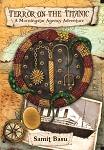
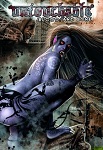
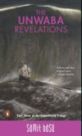
Terror on the TitanicUntouchableThe Simoqin Propheciesmanticores-secret-cover.jpgunwaba-th.jpg
I first met bestselling and critically acclaimed author Samit Basu during Bookaroo 2010.  Participating in his session was an educational experience for a new author like me. Of course the 'education' came wrapped up in oodles of fun. Warm, unassuming, and inclusive, he welcomed ideas from his young (with a smattering of oldies) audience to come up with ideas for a wild and wacky new fantasy. So we had a whale of a time figuring out what a gang of rogue penguins, who were afraid of icy water BTW, would do in Antarctica. Fight flambouyant pirates, save the universe from sinking into a black hole, and outwit a martial arts ace fashionista woman warrior with a taste for chocolates and... we played and tossed about the most outlandish ideas and... voila! Did we see the core of a new story here? As everyone brainstormed, they agreed on one thing for sure. A hint of romance in our story? Yuck!

Samit Basu is a multi-faceted writer with a distinctive voice. Novels, short stories, comics and screenplays, he’s done it all with aplomb. He has created complex sometimes ominous, sometimes whimsical worlds featuring scantily clad centauresses, flying carpets, pink trolls, belly dancers and homicidal rabbits, all working toward or against destroyng a flawed, magical world and defeating the gods at their own game. His latest book, Turbulence, is more mainstream; with imaginative takeoffs from our real world. Aman Sen’s ragtag gang of rogue superheroes can together “stop global warming, turn the Sahara into a rice bowl, find alternatives to oil, stop the damned recession. The kind of things superheroes would do in comics, except the Rural Infrastructure Development League comics wouldn’t really sell well.”
Writing fascinating and imaginative entertainers isn't easy at all. It requires meticulous attention to serious craft.

Samit doesn’t believe writers are only 'agents of entertainment' . It's certainly not true that deep writing can’t be popular and accessible. "Most of the books that really stay with readers are both complex and popular", Samit says. "I don’t go around calling my own books deep, but they’re certainly not shallow, and they’re all fairly complicated, but they sell just fine. I don’t think anyone writes or reads for pure entertainment. I’m actually very serious about the writing. But I like writing about people and situations that are fairly eccentric, so it sort of flows from there. I think humour only works when it’s organic, when it flows from the characters or from the situations these characters are in. "

My interview with Samit Basu is published in Reading Hour


Friday, April 01, 2011

No more Fukushima

While all of urban India gears for a blockbuster World Cup Cricket final showdown, some of us continue to share the pain and show solidarity with the people of Japan. Messages are being exchanged among writers and intellectuals voicing concern for the plight of the people of Japan. May the world  never see another Fukushima or Chernobyl.



Renowned authors Mridula Garg from India and Yuko Tsushima from Japan have shared this deeply moving message

Dear Dear Mridula,

I want you the voice from India "No more Fukushima!".
I believe we have to now cooperate against Nuclear power plant
and also of course, nuclear weapons for our planet with deep,strong anger.

I know your own philosophy, and I learned from you the beautiful word "Dependence". All of us, all of lives are connecting, we are altogather in this world. Yes, it's true.I think now we should act as one of novelists for our planet and all of lives on this planet. At first we were shocked and then weeping for this disaster, but now we got angry with the voice "No more Fukushima!".

When we visited you in New Delhi, it was the time many Japanese papers said India and Paki will soon begin the nuclear war, and already American embassy or Japanese embassy returned to their countries.I am feeling now this case is very similar with our case.Every people on this Earth has so great fear about nuclear power always!
Please, tell your friends "No more Fukushima!" in India. Please, give your voice "No more Fukushima!" to me, I will send it my friends, the novelists, the poets and so on all over the world.
with deepest love,

Yuko Tsushima

***
Here's another message from Author and journalist Ammu Joseph:

May I take this opportunity to share a statement drafted by Romila Thapar and Praful Bidwai regarding the


grave nuclear crisis in Japan and its implications for India? The aim

is to enable citizens, and not just "experts," to engage in the debate.

The idea is to publish the statement in the press and on the internet to

build up public pressure for an honest and serious evaluation of the

situation, especially vis a vis India's nuclear programme. If you wish to endorse the statement, please e-mail Praful Bidwai asap. I'm sure the statement would be greatly strengthened if well-known creative writers like all of you (who can't be dismissed as part of the "anti-nuclear camp") sign on.

And do circulate widely
Ammu

Japan’s nuclear crisis is a wake-up call for India
We deeply regret the death and devastation caused by

the earthquake and tsunami in Japan and are gravely concerned at the disaster

at the Fukushima-Daiichi nuclear power station,

where reactors suffered serious accidents damaging their cores, and released

harmful radiation, resulting in radiation burns and other injuries.
Fukushima’s radiation releases have contaminated drinking water in Tokyo, 220 kilometres

away. According to preliminary estimates based on data from a United Nations

agency, Fukushima has already released about one-fifth as much iodine-131 as

the 1986 Chernobyl catastrophe, and half as much caesium-137; both cause

cancer. The crisis shows that even in an industrially advanced country, nuclear reactors

are vulnerable to catastrophes irrespective of precautions and safety measures.

Small individual incidents in them can spiral into serious mishaps. The

earthquake cut off primary power supply to the reactors. The backup power

failed with the tsunami. Loss of cooling water precipitated the crisis. Two

weeks on, Fukushima remains a threat to the public.
The Japanese nuclear crisis is a wake-up call for India, which has launched a huge

nuclear expansion programme. Yet, instead of acknowledging the gravity of the

crisis, our Department of Atomic Energy has cavalierly minimised it, described

it a “purely chemical reaction”, and declared that Indian reactors cannot

undergo serious accidents.We strongly believe that India must radically review its

nuclear power policy for appropriateness, safety, costs, and public acceptance,

and undertake an independent, transparent safety audit of all its nuclear

facilities, which involves non-DAE experts and civil society organisations. Pending the review, there should be a moratorium on all further nuclear activity, and revocation of recent clearances for nuclear projects.


Sunday, March 13, 2011

War and redemption


Picture perfect: Joshua, outside a church in Liberia.photos: left; Joshua inviting pople to hear his sermon. 


Picture-speak: (From left) Liberia — The Redemption of General Butt Naked; An Afghan National Army soldier in a poppy field; An Afghan farmer in his fields.


Joshua Milton Blahyi AKA General Butt Naked reacts with childlike joy at the end of an intense grilling session with Ryan and his colleagues.
Right: An Afghan farmer in his poppy field

 I recently viewed Ryan Lobo's latest collection of photographs and interacted with him. In the course of researching the heroin trade in Afghanistan and filming the award winning Redemption of General Butt Naked, Ryan travelled through war ravaged Afghanistan, Liberia and Iraq. Journeying through dangerous territory among desperate men, Ryan and his colleagues faced grave risk to their own lives. Travelling in armoured military vehicles accompanied by private security guards, they often had to seek safe spots on news of approaching Taliban forces. In the course of his travels, Ryan shot his own still photographs, which he feels can at times tell a deeper story relevant to all humanity.

During a bloody 14 year long civil war, Liberia was abandoned and forgotten by the rest of the world. In this chaos, the warlord Joshua Milton Blahyi emerged as one of the world's most brutal mass murderer. He is estimated to be responsible for the deaths of over 20,000 people either personally or through his army of child soldiers. Joshua and his followers went forth to fight and kill dressed only in boots and guns. Many believed that fighting naked made them invisible and invincible to enemy bullets. What sets Joshua apart is that at the height of his power, he abandoned the battlefield and had a wake up call. He turned to a pastor, Kun Kun, who urged him to confess his sins to those whom he had wronged, and seek their forgiveness.

Ryan and his colleagues followed the contrite Joshua as he approached his victims, offering food and money though he himself was nto a rich man. His camera records intense moments; a man beset with his own bloody history trying to hold on as he faces people who sometimes hear him and forgive him. Often, he faces hostility and msitrust. Images of these victims show various expressions of doubt, mistrust, hostility, anger, and peaceful resignation. "I cannot conclude what went on in their minds," Ryan says. He captured with his camera these intense and somewhat chaotic moments. The experiences of these individuals are part of the greater story of humanity, with its never ending cylces of war, peace, viollence, atonement and sufferings.

It is difficult to assess a man like Joshua, Ryan feels. His violent crimes and his repentance are both true, different facets of a complex individual. some images capture Joshua’s relief and even childlike glee at the end of grilling sessions. “Repentance, contrition and murder are equally real and true in Joshua’s case.” In this unfolding story of perpetrators and victims, how could a man like Joshua transcend his personal history? “Some questions are not meant to be directly raised or answered,” Ryan says. “These ideas came to me as we shot the film, and I tried to let the larger philosophical story of humanity speak through my photographs.”


My detailed account can be read in
Deccan Herald